
Last updated October 30, 2026
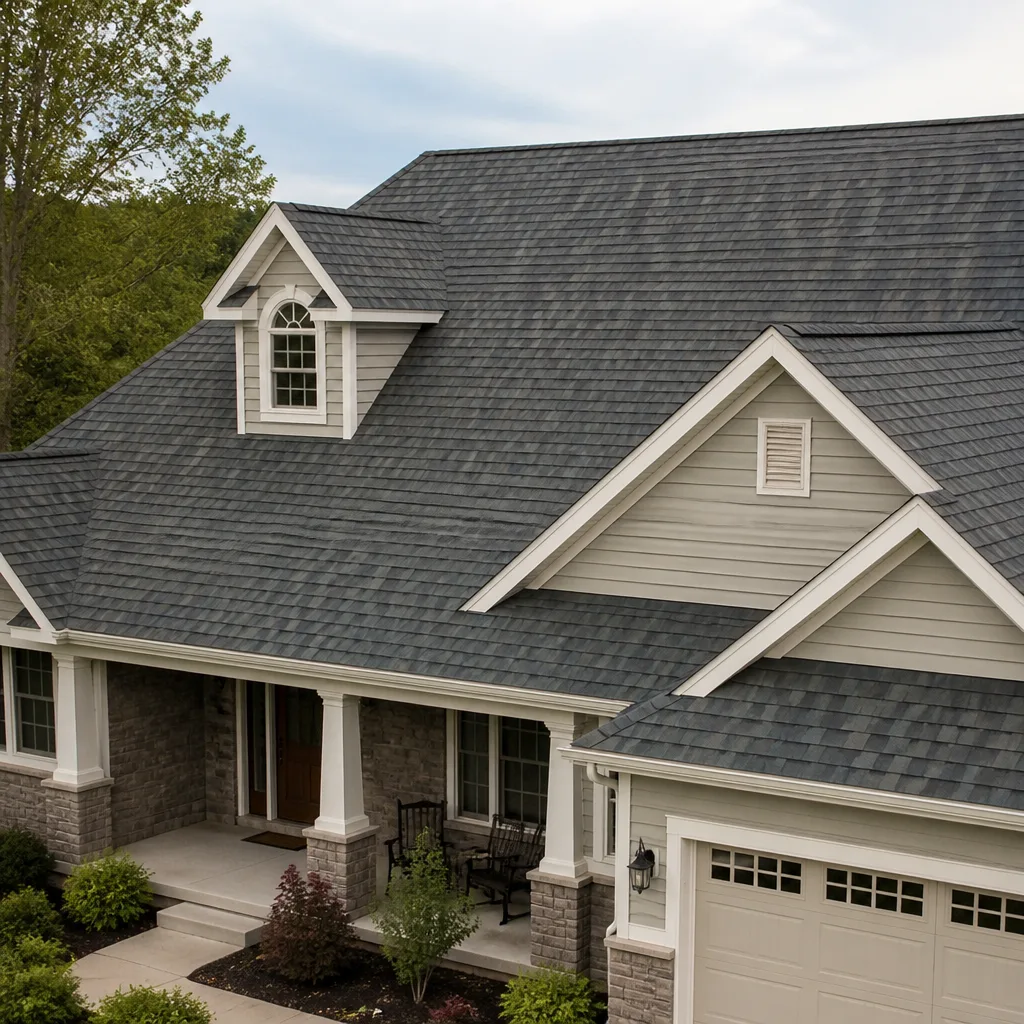 Architectural shingles
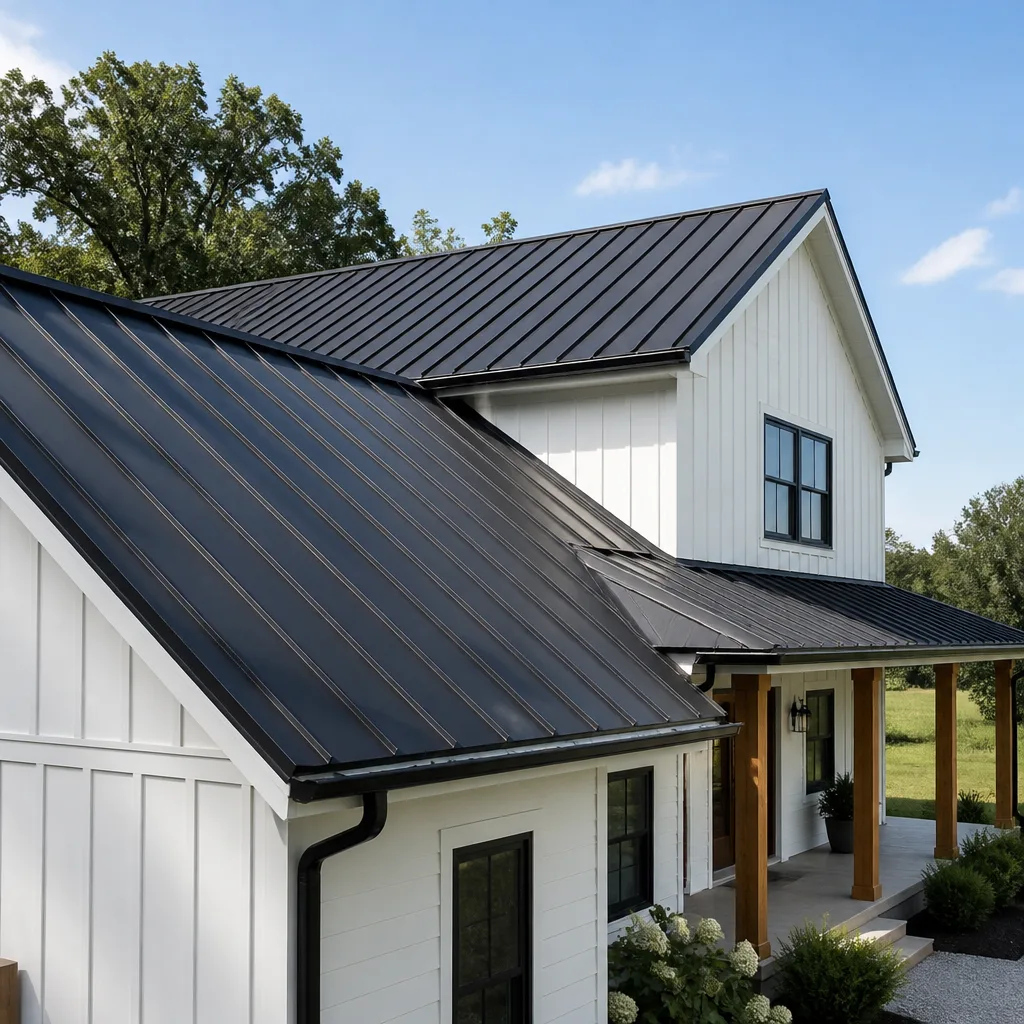 Metal roofing
 Tile roofing
 GAF
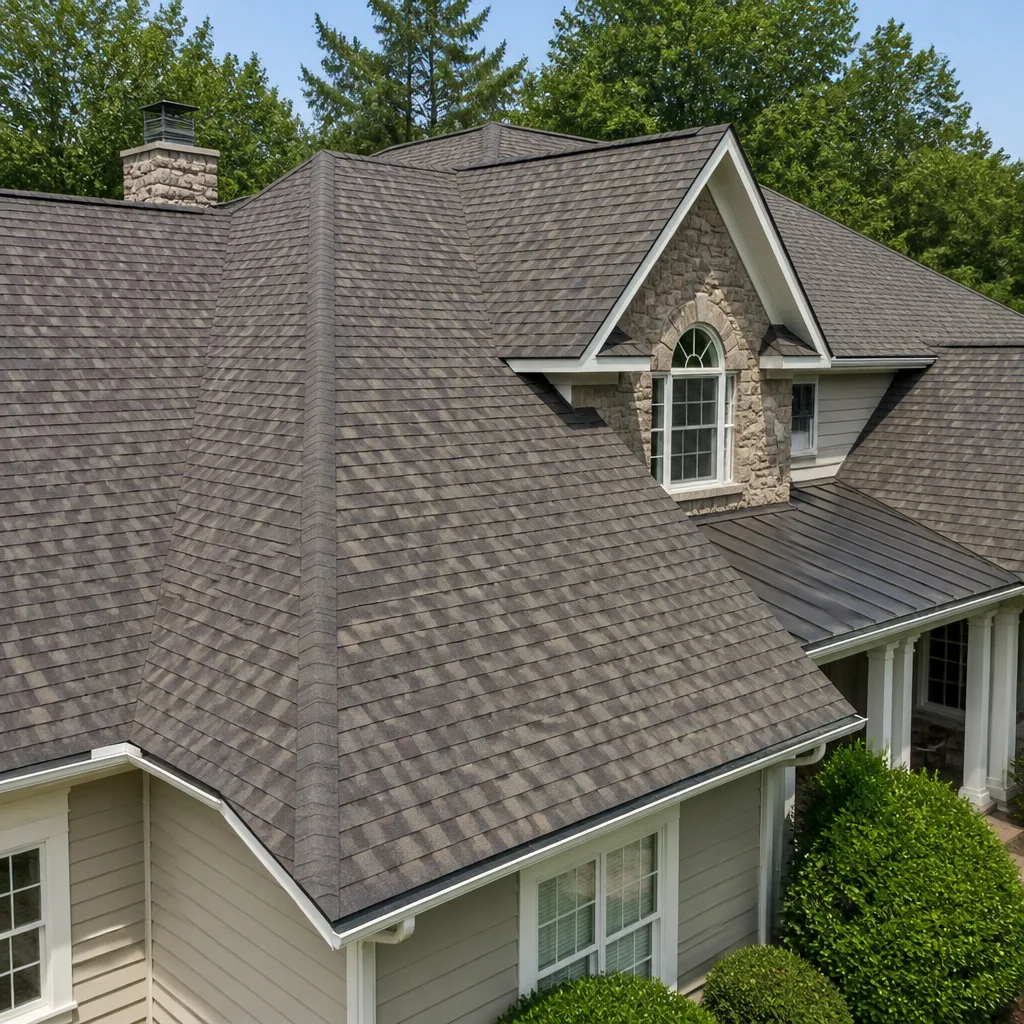 Owens Corning
 Flat & low-slope
Free roof inspection with deck photos before we talk money - GAF and Owens Corning certified installation
Roof Repair Troubleshooting: Common Problems and How to Fix Them
That water stain on your ceiling is almost never directly below the hole in your roof. Water travels. It runs along rafters, creeps across sheathing, follows electrical conduit, and drips down pipes. It can move several feet horizontally before gravity finally pulls it through your drywall. Patching where you see the stain is one of the most expensive mistakes a Koreatown property owner can make. This guide will teach you how to trace a roof leak backward to its true origin, identify which failures are actually common on roofs in this climate, and know which repairs make sense to attempt yourself and which ones need Roof Repair services before the problem spreads.
Styles & brands we work with
Quick Answer
The most common roof problems are leaks caused by failed flashing, cracked pipe boots, and deteriorated ridge caps, followed by field membrane damage and clogged gutters. Most leaks are misdiagnosed because the visible stain inside sits several feet from the actual breach, so the first step is always tracing water backward to its source before touching any repair material. For anything beyond basic sealant work on an exposed, clearly identified breach, call a roofing specialist like Koreatown Roofing at (866) 974-2271 for a free estimate.
Table of Contents
- Why the Leak Is Never Where You Think It Is
- The Five Failure Points That Cause Most Roof Leaks
- How to Trace a Leak Systematically: The Hose Test and Elimination Grid
- Active Leak Damage vs. Old Staining: Don’t Pay to Fix What’s Already Fixed
- DIY Sealant Repairs vs. Problems That Need a Professional
- Repair-Worthy or Replacement-Ready: How to Get a Straight Answer
- Flat Roof vs. Sloped Roof Problems: Different Roofs Fail Differently
- What Your Roof Material Choice Has to Do With Repair Frequency
- Common Mistakes to Avoid
- When to Call a Professional
- Frequently Asked Questions
- The Bottom Line
Why the Leak Is Never Where You Think It Is
We’ve walked into homes in Koreatown where a damp patch near a bedroom window made homeowners certain the leak was at the window flashing. Tracing the moisture path showed water entering at a deteriorated ridge cap twenty feet upslope, running along the underside of the roof deck, and only surfacing where the drywall met the window framing. This is not a rare case. Roof water is tricky because it follows the path of least resistance, and that path is seldom a straight vertical drop.
On a sloped roof, water can travel laterally across the sheathing for surprising distances before finding a seam, a nail penetration, or an electrical junction to drip through. In multi-level homes common around Koreatown, water from an upper roof section can run inside a wall cavity and emerge on the lower floor. The bathroom ceiling stain might originate at a vent pipe boot on the upper roof, not above the bathroom at all.
The practical rule we give homeowners is simple: the stain tells you where water surfaced, not where it entered. Before you buy sealant, before you call anyone, you need to map the potential path. The troubleshooting method in this guide is built around that principle.
This matters because the cost of misdiagnosis is real. A homeowner who patches a stain location might spend a few hundred dollars on sealant and paint, then watch the stain return after the next rain. The second repair attempt often costs more, because by then the water has spread further into the roof deck. By contrast, Roof Repair in Koreatown that starts with correct diagnosis usually resolves the issue in one visit.
The Five Failure Points That Cause Most Roof Leaks
In our experience across hundreds of roof inspections, the vast majority of leaks on Koreatown and greater LA-area roofs come from five specific locations (for a deeper look at what these repairs might cost, see our Roofing Cost Breakdown: The Koreatown Homeowner’s Reference for 2026). Homeowners who can identify which one matches their roof’s profile will be far ahead in the troubleshooting process. Here they are, ranked by how often we encounter them on roofs in this climate.
1. Flashing failures
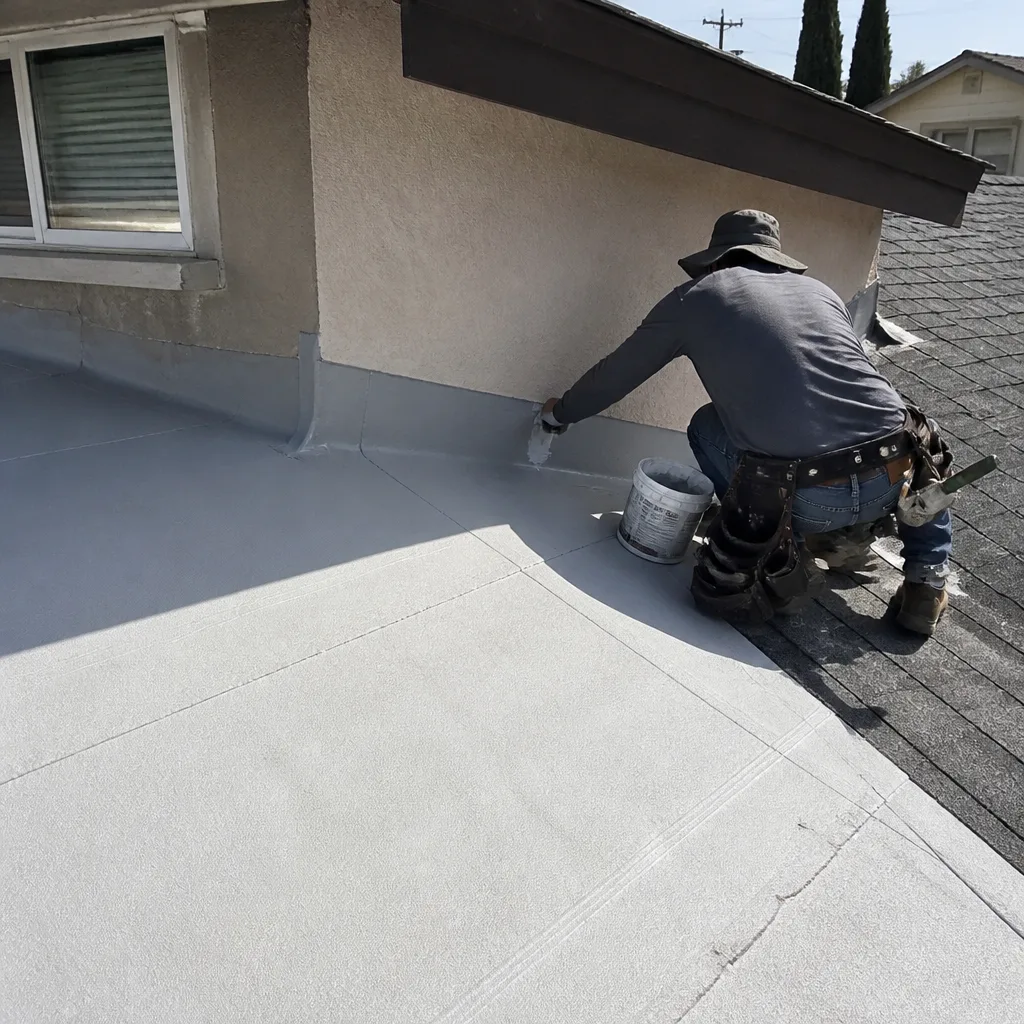
Flashing is the metal material wherever the roof meets something else: chimneys, skylights, side walls, valleys, dormers, and vent pipes. Flashing is also the most common leak source on any roof. The reason is simple. Flashing is the most physically stressed component. It expands and contracts with temperature swings, gets battered by wind, and is installed at roof transitions where water flow is concentrated.
LA’s climate is deceptively hard on flashing. The intense summer sun heats metal flashing well past 140 degrees on many Koreatown roofs, then cool coastal evenings contract it repeatedly. Over five to ten years, the thermal cycling breaks down sealant joints and loosens fasteners. Rust, when present, accelerates the problem.
A failed flashing section often shows as streaked or rusted metal, lifting edges, or visible gaps where flashing meets masonry or shingles. Inside the home, the leak usually appears where a wall meets the ceiling or near a chimney chase, not directly above the flashing point.
2. Pipe boots and vent boots
The rubber boot that seals the base of every plumbing vent pipe on your roof is a wear item, and in the LA sun, it fails faster than most homeowners expect. A typical neoprene pipe boot lasts eight to fifteen years. Sun exposure and heat dries the rubber, causing it to crack, split, or pull away from the pipe.
The pipe boot is one leak that often does show directly below the breach, because pipes run vertically through the attic. A stain on the ceiling below a bathroom vent stack is a strong signal to check the boot. But even here, water can ride along the pipe and drip elsewhere, so don’t skip the tracing step.
Pipe boot replacement is one of the more straightforward repairs on the list, provided there’s safe access. We’ll discuss when it makes sense to attempt this yourself below.
3. Ridge caps and hip caps
Ridge caps are the shingles that run along the peak of the roof, covering the seam where two roof planes meet. Hip caps do the same job along angled roof joints. These cap shingles are cut to size, nailed in place, and often sealed with adhesive or roofing cement.
Ridge caps fail from a combination of wind lift and seal deterioration. On older roofs, or roofs installed without proper nailing patterns, these caps loosen and allow water to enter right at the top of the roof. Once water is in at the ridge, it can travel the entire length of a rafter before appearing. This is why ridge cap failures are disproportionately tied to “mystery stains” far from any chimney or pipe.
We see the same phenomenon on every roof type we work with, from GAF and CertainTeed architectural shingles to Tamko and Atlas products. The material does not protect against improper installation or age-related seal breakdown.
4. Field membrane damage
The field membrane is the large, uninterrupted area of shingles or roofing material between the ridges, hips, and edges. Leaks here are less common than at flashing or caps, but they happen. Causes include storm-driven debris, foot traffic from trades like HVAC or satellite installers, hail, and material manufacturing defects.
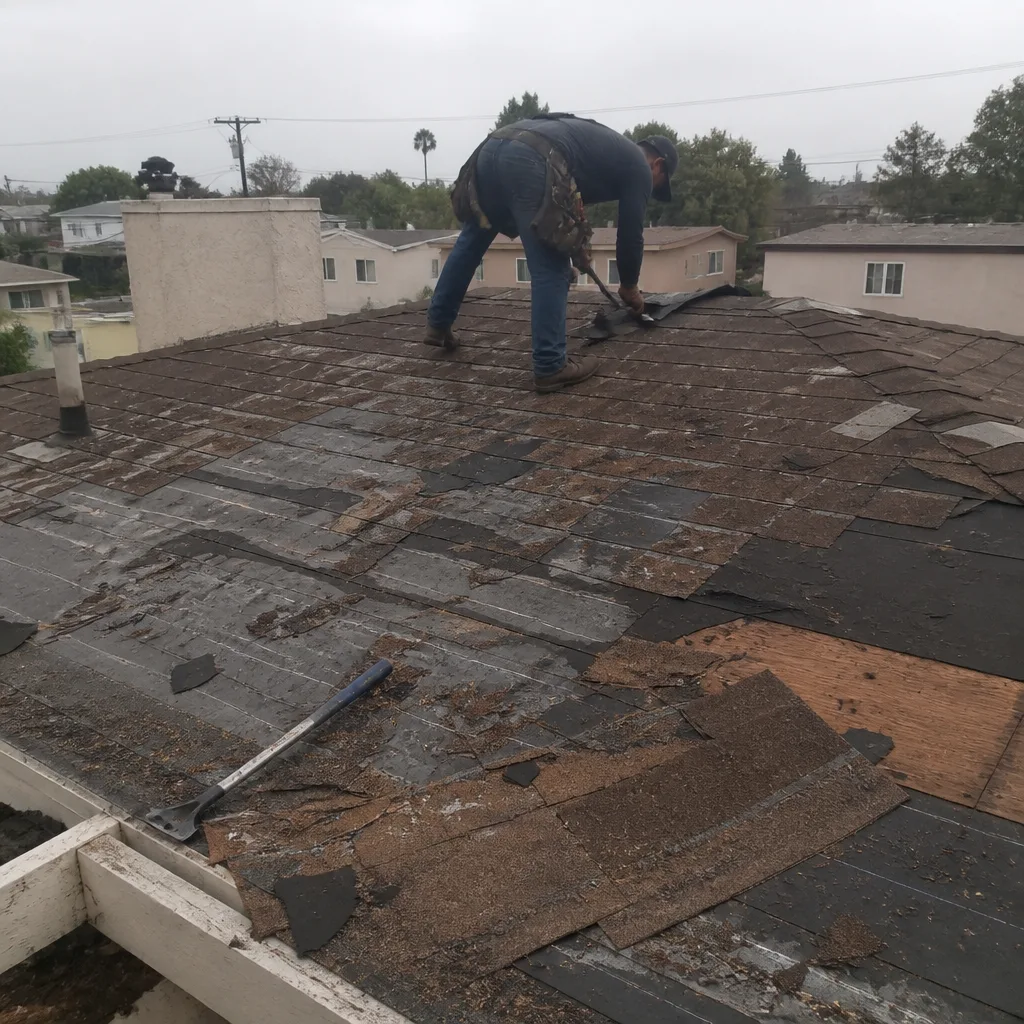
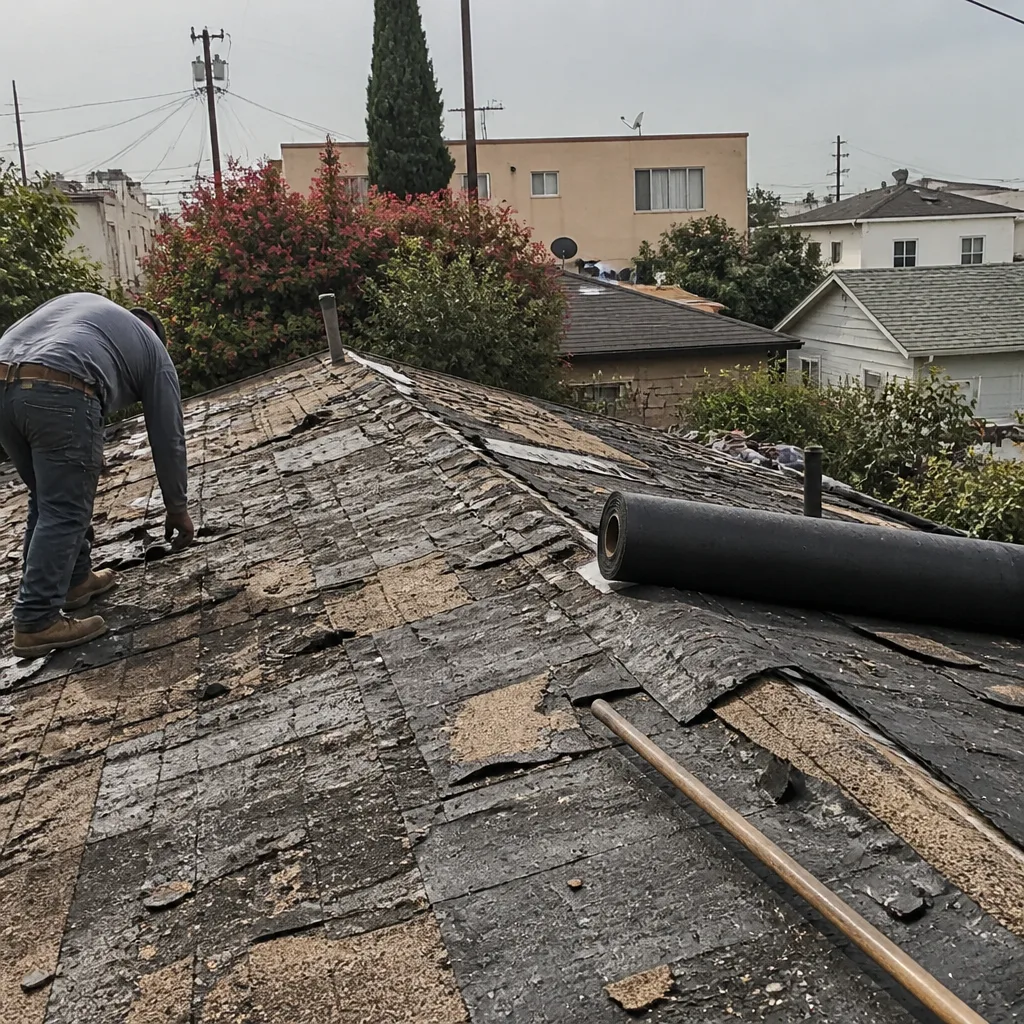
On shingle roofs, field damage shows as missing, cracked, curled, or blistered shingles. On flat or low-slope roofs, the field membrane may show blisters, splits, or open seams in the rolled material. One important LA-specific note: our seasonal Santa Ana winds can lift shingle edges even on a well-installed roof, especially if the shingles are aged or the seal strip has degraded.
5. Gutters and edge drainage
Gutters don’t cause leaks in the field of the roof, but clogged or sagging gutters create secondary damage that eventually does. When gutters overflow, water runs down fascia boards and behind them, soaking the roof edge and the wall below. Over time this rots the fascia, the soffit, and the roof deck edge.
In a city with a long dry season, debris accumulates in gutters all summer. The first heavy fall rain finds gutters packed with leaves and dust. Water backs up over the gutter lip and attacks the roof edge. This problem is common enough in Koreatown that we look at gutter condition on every Roof Inspection in Koreatown we perform, even when a homeowner called about a different issue.
How to Trace a Leak Systematically: The Hose Test and Elimination Grid
If you’re willing to do the detective work, the hose test is the most reliable way for a homeowner to pinpoint the actual breach location. It works best with two people: one on the roof running the hose, one in the attic or inside the house watching for water. The key is to work in sections, slowly, from the lowest point of the suspect area upward.
The hose test method
- Start at the lowest point of the suspect zone. If the interior stain is on a ceiling, start at the roof edge directly below it. Run water on that section for 10 to 15 minutes. Soaking one section at a time is slow but essential. Dumping water across the whole roof tells you nothing about where it entered.
- Work upward in horizontal bands. Only move to the next higher section if no water appears inside. This is the critical discipline. Water flows downhill, so if you start at the top and work down, you’ll never isolate the entry point.
- Include all nearby penetrations. When you reach a band that contains a vent pipe, chimney, skylight, or wall junction, soak that area thoroughly. These are the prime suspects covered in the section above.
- Have the second person watch and log. The inside observer marks the time each zone test started and when any water appears. The zone that produces water while lower zones stayed dry is your breach location.
- Mark the point on the roof. Once confirmed, mark the exact spot with chalk or painter’s tape. This is the location any repair should address.
The elimination grid
If you can’t safely access the roof or run a hose test, use a simple elimination grid to narrow candidates. List every roof penetration or potential failure anywhere above the stain: ridge caps, pipe boots, flashing, field damage, gutters. For each item, note its position relative to the stain, the roof slope direction, and any visible damage. Then eliminate what can’t be the source.
- Below the stain on the roof plane? Eliminate. Water does not run uphill.
- More than 20 feet upslope with no continuous path? Unlikely but possible via rafter flow. Keep as a secondary suspect.
- Visible cracking, rust, or lifting? Primary suspect.
- Closest penetration above the stain? Secondary suspect if it looks intact.
This process narrows the problem to one or two locations in most cases. When it doesn’t, that’s a signal to call us. We perform this exact diagnostic on every repair visit, and we’ll explain what we found in terms you can see and verify.
Active Leak Damage vs. Old Staining: Don’t Pay to Fix What’s Already Fixed
Roofs are full of history. A stain on the attic sheathing or an old water mark on the ceiling might be from a leak that was repaired years ago. Distinguishing old staining from active leakage is simple, but the distinction saves real money, because you never want to pay for repairs based on a ghost.
Active water damage has specific signatures. The area feels damp or cool to the touch. There may be a sheen of moisture. Wood shows darker coloring that spreads with each rain, and there’s often a musty or earthy smell. If you press a paper towel against the spot after heavy rain and it comes away damp, that’s active water movement.
Old staining is dry. The wood is often lighter in color with a tide line around the stain’s edge, showing where water once pooled. There’s no smell beyond old wood. A paper towel pressed to the area stays dry. Paint on ceilings may show brown rings, but if the ring does not grow after rains and the surface stays dry, that leak is history.
One trick we use on inspections: circle the stain with a pencil. If the stain extends past the pencil mark after the next rain, the leak is active. If it stays within the circle through several storms, you’re looking at a closed case.
This matters when you’re getting repair quotes. A contractor who doesn’t distinguish active from old damage may recommend repairs for areas that don’t need work. A roofing specialist who does only roofing, like Koreatown Roofing, will tell you what’s active, what’s old, and what can be monitored. That’s the kind of honest answer our customers expect.
DIY Sealant Repairs vs. Problems That Need a Professional
Some roof repairs are genuinely manageable for a capable homeowner. Others become worse the moment an amateur touches them. For guidance on handling urgent situations safely, see our Roofing Emergency Preparedness Guide for Koreatown Homes. The dividing line is not about skill with a caulk gun. It’s about whether the repair area has structural or safety complications, and whether a failed patch will create hidden rot.
Cases where DIY is reasonable
- Small, exposed flashing gap at a pipe boot or vent, where the rubber is still pliable and the gap is narrow. A quality roofing sealant can bridge the gap temporarily.
- Loose shingle tab that can be re-adhered with roofing cement, provided the shingle is not cracked and the roof deck below is sound.
- A single cracked shingle in an easily accessible location, where you can safely lift the shingle above, remove the damaged one, and nail in a replacement without walking on fragile areas.
- Gutter cleaning and minor re-securing of a loose gutter bracket, which is maintenance rather than roof repair but prevents bigger issues.
Cases where you should stop and call
- Any roof taller than one story. Falls from roofs are a leading cause of home-repair injuries. The risk is not worth the savings.
- Work near the roof edge or on a steep pitch. Even pros treat these zones with extra caution and safety equipment. Homeowners should not be anywhere near them with a tool in hand.
- Any repair involving roof decking. If the sheathing is soft, rotted, or you can see daylight through it, the problem is structural. Sealant cannot fix structural rot, and covering it up just hides rot until it fails catastrophically.
- Flashing that involves chimney masonry or wall siding. Proper flashing repair here often means cutting into the masonry or removing siding courses. Doing it wrong creates a bigger leak than you started with.
- Any repair that requires working around electrical service lines, satellite dishes, or HVAC equipment.
A final note on DIY: amateur patches frequently fail within a year. The sealant pulls away, the shingle lifts again, and by then water has been flowing underneath longer than it would have if the repair had been done right the first time. We routinely see small DIY patches that turned a $400 repair into a $2,000 repair because the temporary fix allowed rot to spread. When in doubt, the free estimate costs nothing, and it tells you what you’re actually dealing with.
Repair-Worthy or Replacement-Ready: How to Get a Straight Answer
Every roof reaches a point where repairs stop being economical. The challenge for homeowners is that different contractors draw that line in different places. A general contractor who’d rather book a larger job may push replacement early. A contractor who makes margin on patches may keep repairing a roof that should go. Getting a straight answer requires knowing what unrepairable actually looks like.
A roof is repair-worthy when the damage is localized, the surrounding material is still sound, and the roof has meaningful expected life remaining. A single flashing failure on a twelve-year-old roof with good shingles is a repair. A single pipe boot failure on a roof with five years of life left is a repair, even if other boots are nearing their end.
A roof is replacement-ready when damage is widespread or when the underlying structure has degraded. Repetitive leaks in multiple locations, shingles that are curled and cracked across entire roof planes, decking that shows rot in several bays, or a roof that’s past 80 percent of its expected lifespan: these are replacement indicators. Adding repair after repair on such a roof is throwing good money after bad.
One useful test: ask the contractor to show you the damage. Any roofing specialist who’s being straight will walk you through photos or let you view the problem areas. If the pitch is all numbers and no evidence, get a second opinion.
Here’s where Koreatown Roofing’s position is different. We do repairs and replacements, so we have no structural reason to prefer one over the other. When we tell you a roof needs replacement, it’s because repair no longer serves you. And because we work with seven manufacturers, the replacement conversation includes GAF, CertainTeed, Owens Corning, and other brands you already trust, rather than one brand we happen to stock. Your roof, your material choice.
If your roof is genuinely at end of life, you can read more about Roof Replacement in Koreatown to understand the full process before you talk to any contractor.
Flat Roof vs. Sloped Roof Problems: Different Roofs Fail Differently
Koreatown has both housing styles in abundance. Older single-story homes and some mid-century builds use flat or very low-slope roofs, while most newer and two-story homes use sloped shingle roofs. The failure patterns are different enough that troubleshooting must begin with what type of roof you have.
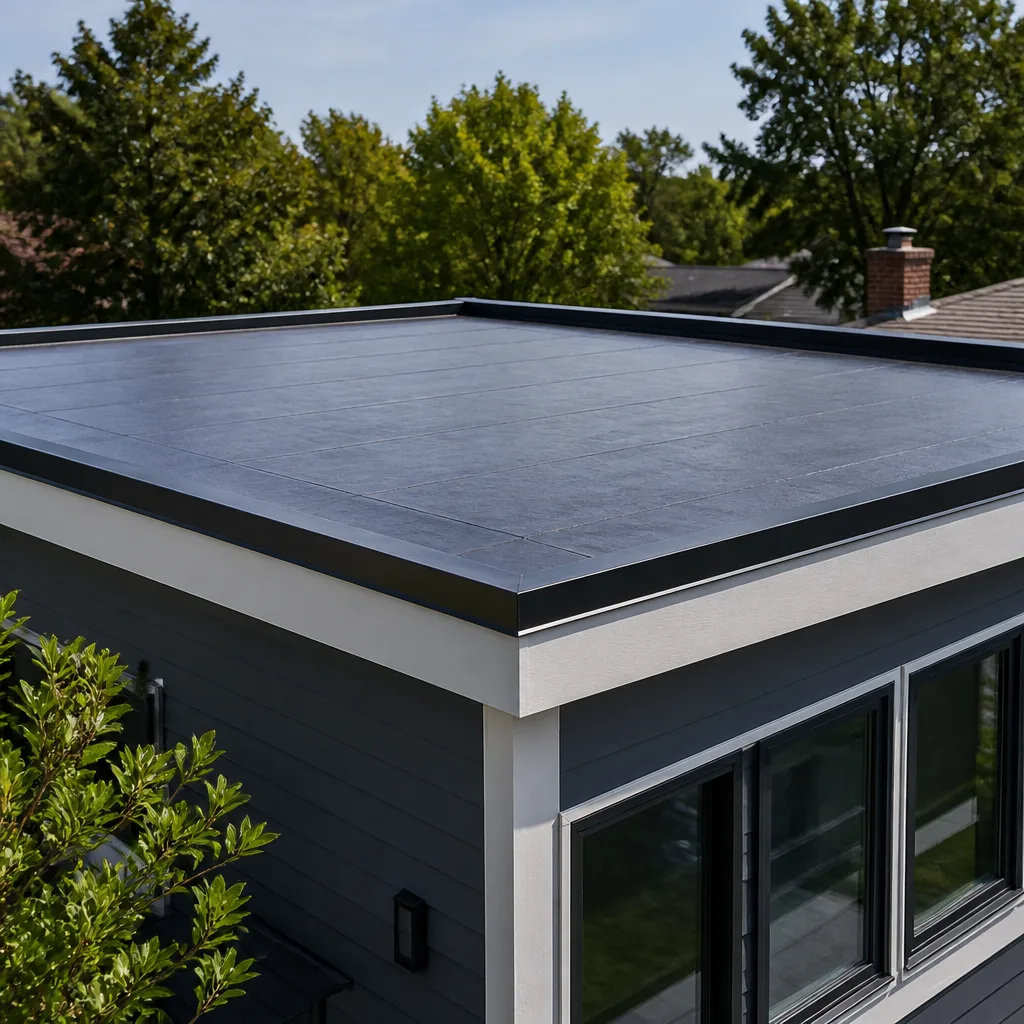
Flat roof failures tend to appear as ponding water, open seams, blisters in the membrane, and cracking around penetrations. Flat roofs are less forgiving of installation errors because standing water finds every weakness. A flat roof leak often shows directly below the breach, because the membrane is continuous and water can’t travel far across a mostly level surface. However, if the roof has a slight slope, some lateral movement still occurs.
Flat roof materials include built-up asphalt, modified bitumen, and single-ply membranes like TPO or PVC. Each has specific failure modes. Modified bitumen splits at seams when the material ages. TPO fails at welded joints if they were ever imperfect. Built-up roofs crack with age and UV exposure. The repair approach is different for each, which is another reason a roofing specialist matters more than a generalist who might only know one material.
Sloped roof failures are dominated by the five failure points covered earlier: flashing, pipe boots, ridge caps, field shingles, and edge drainage. The traveling-water phenomenon is most dramatic on sloped roofs. A ridge cap leak on the back slope can surface as a stain on the front ceiling, which confuses homeowners every time.
If you’re not sure what type of roof you have or what material it’s made of, start with a Roof Inspection in Koreatown that documents the material, condition, and remaining life. It’s the single best input for making a repair decision with eyes wide open.
What Your Roof Material Choice Has to Do With Repair Frequency
Not all shingles age at the same rate, and the brand on your roof has a real effect on how often you’ll be troubleshooting problems. This is why Koreatown Roofing carries multiple manufacturer lines instead of a single brand. Different homes, budgets, and exposure conditions call for different materials.
Architectural shingles from GAF and CertainTeed are common in our service area and hold up well in LA heat when installed correctly. Owens Corning products we install are similarly proven in this climate. Boral tile systems, while a different price class entirely, offer durability that can outlast several generations of asphalt shingle replacements, though tile has its own repair considerations around cracked tiles and underlayment replacement.
Tamko and Atlas round out the selection for homeowners who want specific warranties or color options at certain price points. The point is not that one brand is universally better. The point is that matching material to the specific roof geometry, sun exposure, and homeowner’s long-term plans is a real decision, and it’s harder to make when a contractor only carries one line.
Repair frequency also depends on installation quality, which is why we’re a roofing-only contractor. Every job we take is a roof job, not a side project between remodels. That focus means our crews are thinking about flashing details, nailing patterns, and leak prevention on every single project. Roofing specialists, not generalists, and it shows in what fails less often.
Common Mistakes to Avoid
- Patching the stain instead of the source. The number one mistake. A stain is a symptom. Find the breach before spending money.
- Using the wrong sealant. Indoor caulk, silicone bathroom sealant, and generic construction adhesive are not roofing materials. They degrade in UV exposure and fail within months. Use roofing-grade sealant rated for exterior roof use.
- Walking on the roof without knowing where it’s safe to stand. Stepping on cracked tiles, ridge caps, or damaged decking can turn a $300 repair into a broken bone and a bigger hole. Always plan your path and never walk on tile roofs without experience.
- Ignoring small leaks because they only appear in heavy rain. Intermittent leaks are still leaks. The water is entering your roof deck every time it rains, even when it doesn’t travel far enough to stain. By the time a stain appears consistently, the deck rot is often worse than expected.
- Replacing shingles over rotted decking. Nailing a new shingle into rotted wood gives you a shingle that’s not attached to anything. The repair fails, and the rot continues underneath. Decking must be solid before surface repairs.
- Getting one opinion from a contractor who only does replacements. A roofer who doesn’t do repairs may tell you the roof needs replacement because that’s the only service they sell. Ask whether they repair roofs at all before taking the recommendation at face value.
- Waiting until you see water to check the roof. Most major roof problems are visible long before they leak. Regular inspections catch failing flashing, brittle boots, and loose caps before water moves in.
When to Call a Professional
Call a professional when the breach is not clearly identified, when the repair requires working on a steep or high roof, when decking appears rotted, or when previous repairs have failed. Call when you have a flat roof membrane issue, since these systems are unforgiving if repaired incorrectly. Call when you need a straight answer on whether the roof is worth repairing at all. Koreatown Roofing offers free estimates in Koreatown. We’ll diagnose the problem, show you the evidence, and lay out your options in plain language. Reach the team at (866) 974-2271.
Frequently Asked Questions
The cost of roof repair in Koreatown depends on the type and extent of the damage. Minor fixes like a pipe boot replacement or small flashing seal typically run $300 to $700. Repairs involving multiple flashing points, decking replacement, or large membrane sections range from $800 to $2,500. A full replacement is a different conversation. Call (866) 974-2271 for an exact quote, estimates are free.
Touch the stain and surrounding area. Active leaks leave the surface damp, cool, or musty, while old stains are dry with no smell and no growth at the edges. Draw a pencil line around the stain and check after the next rain. If the stain extends past the line, it’s active.
You can handle small, clearly identified breaches at ground level or on a low, safe roof, such as minor pipe boot sealant or one loose shingle. Anything involving steep slopes, height, structural decking, or flat roof membranes belongs with a roofing specialist. If you’re unsure, it costs nothing to ask.
A correctly done roofing repair on otherwise sound material should last for years, often outliving the remaining life of the roof in that area. The keys are proper diagnosis, roofing-grade materials, and correct installation. Failed DIY patches typically last less than a year because they address the wrong spot or use the wrong product.
In the LA area, thermal cycling from intense sun damages flashing and rubber pipe boots faster than in cooler climates. Santa Ana winds loosen ridge caps and shingle edges. Dry-season debris buildup clogs gutters before the first fall rains. The most common leak sources rank in this order: flashing, pipe boots, ridge caps, field damage, and gutter-related edge rot.
Repair if the damage is localized, the surrounding material is in good condition, and the roof has meaningful life left. Replace if there are leaks in multiple locations, widespread shingle failure, rot across several decking bays, or the roof has passed most of its expected lifespan. A contractor that handles both, like Koreatown Roofing, has no incentive to push you toward the wrong answer.
The Bottom Line
Roof troubleshooting starts with one rule: the stain is never the source. Trace water backward, isolate the breach through systematic testing, and distinguish active damage from old history. Most leaks come from five familiar points: flashing, pipe boots, ridge caps, field damage, and gutters. Some of these repairs are simple for a careful homeowner, while others belong with a specialist immediately. When the line blurs, get a straight answer from Koreatown Roofing home. We’re roofing-only, we carry the brands you already trust, and we’ll tell you what you need, not what’s convenient for us. Call (866) 974-2271 for a free estimate.
Written by the team at Koreatown Roofing, serving Koreatown since 2014.
See the difference
 Before
 After
 Before
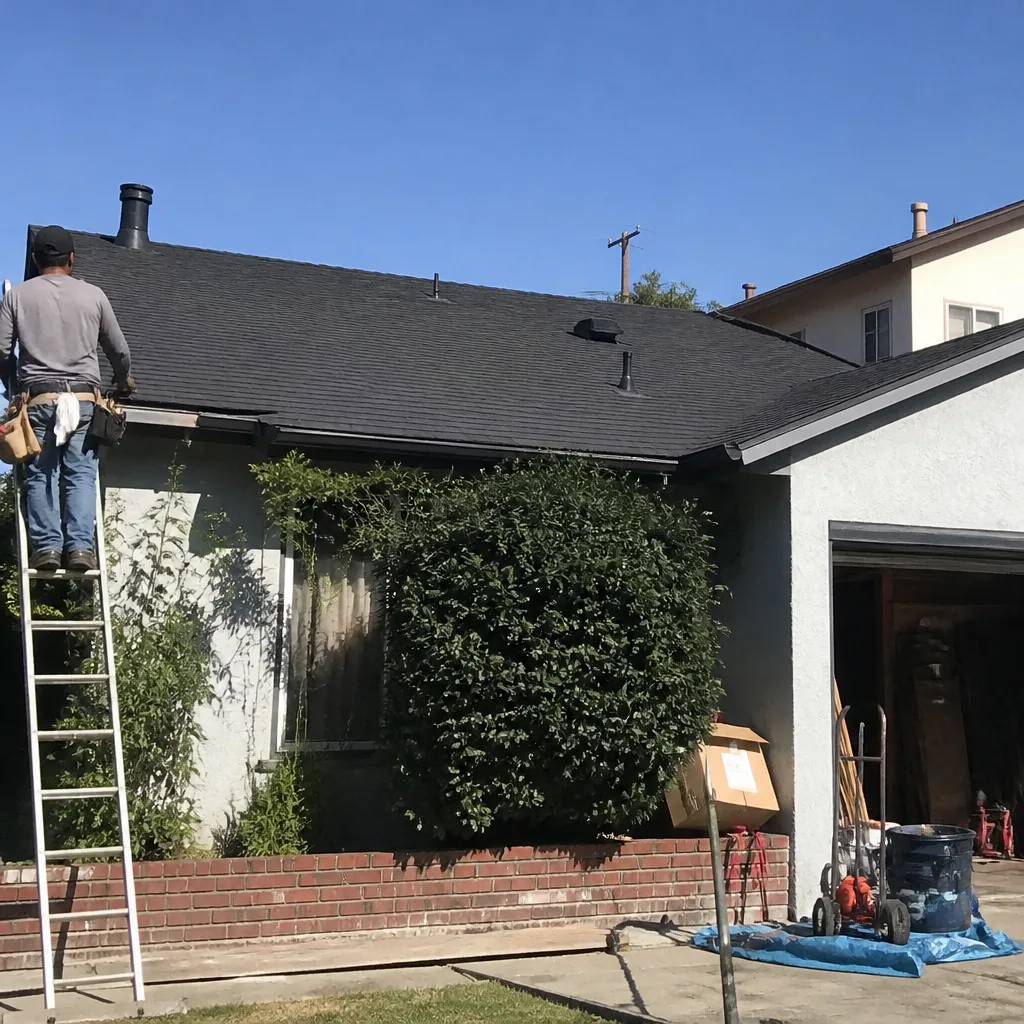 After
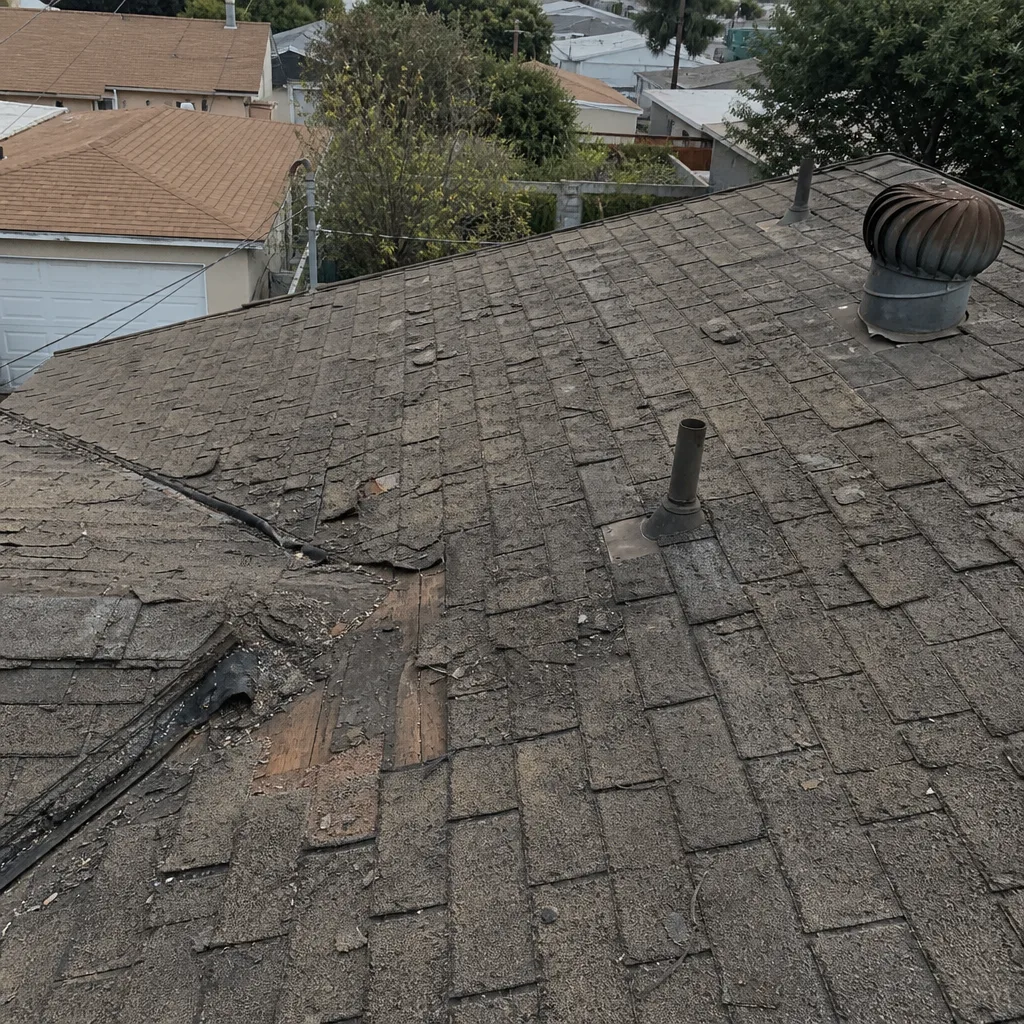 Before
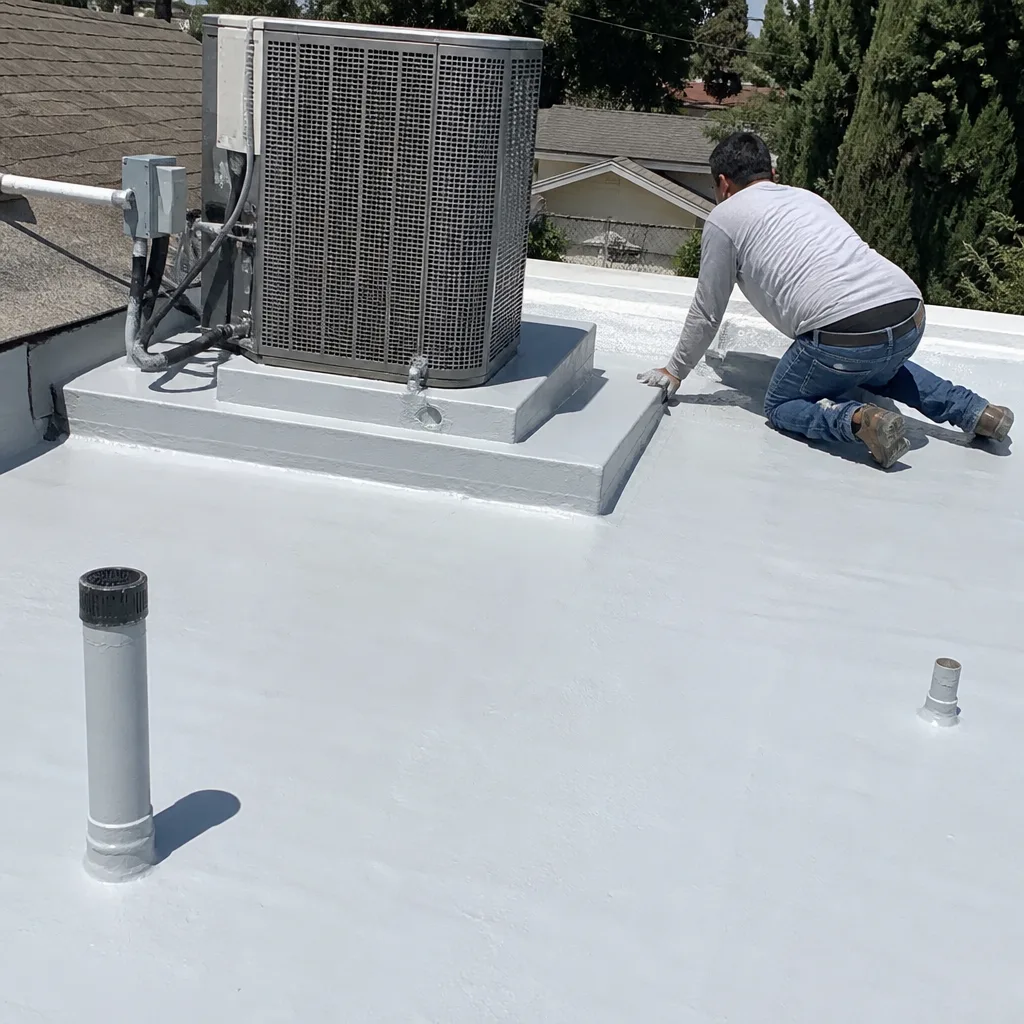 After