
Last updated October 30, 2026
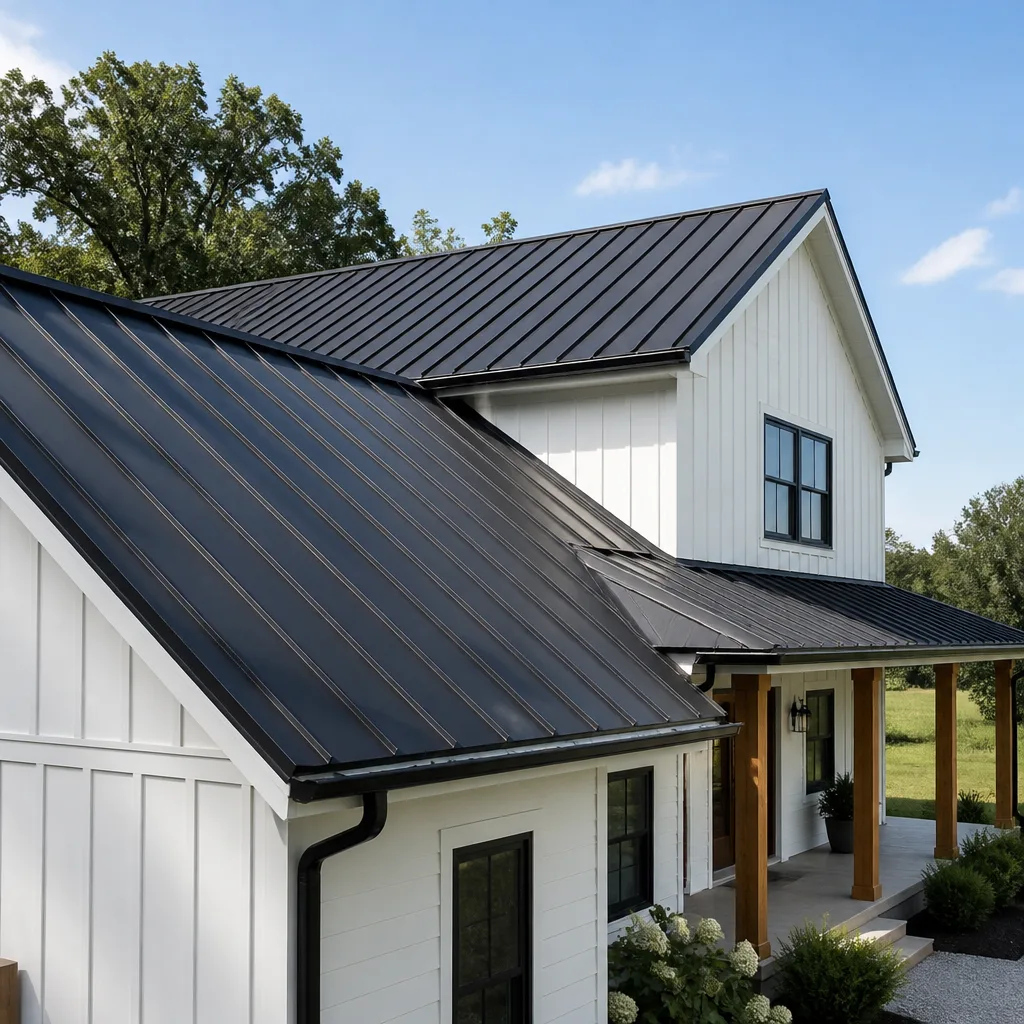 Metal roofing
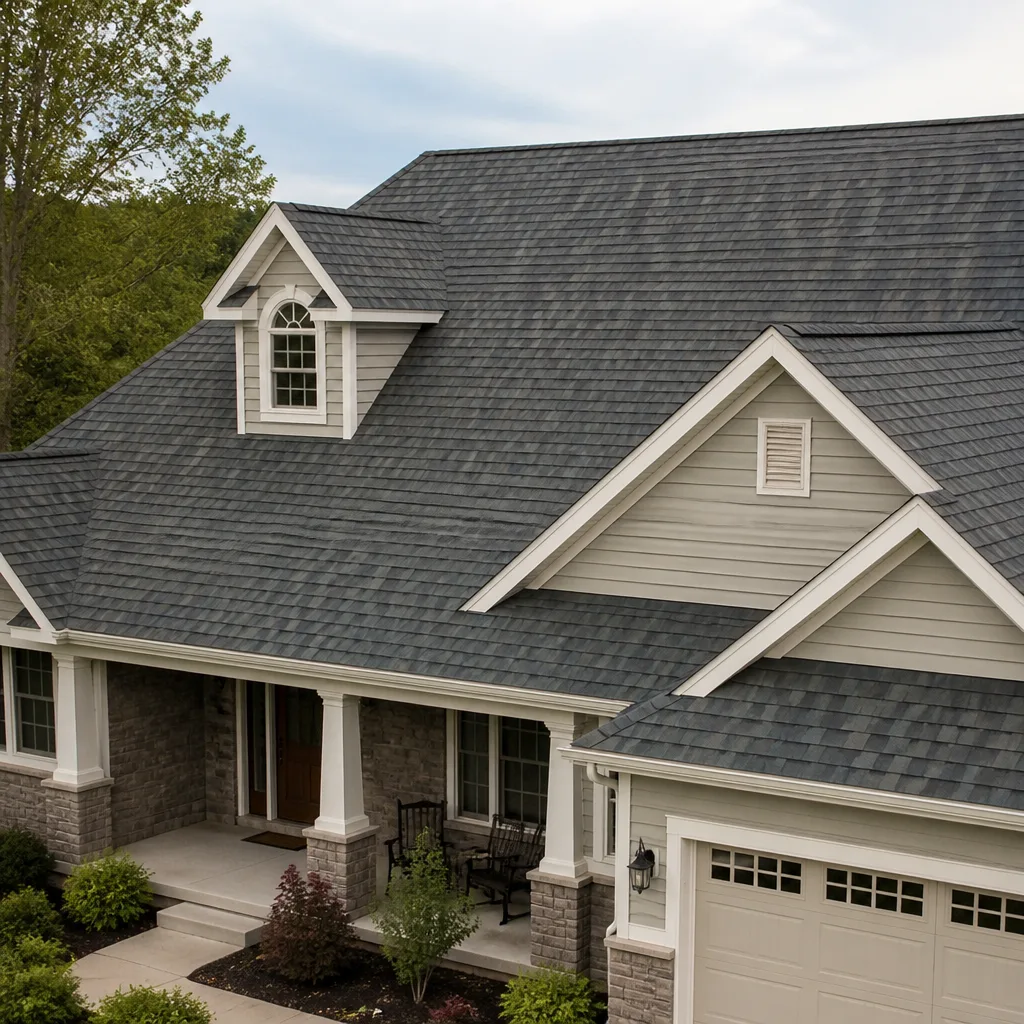 Architectural shingles
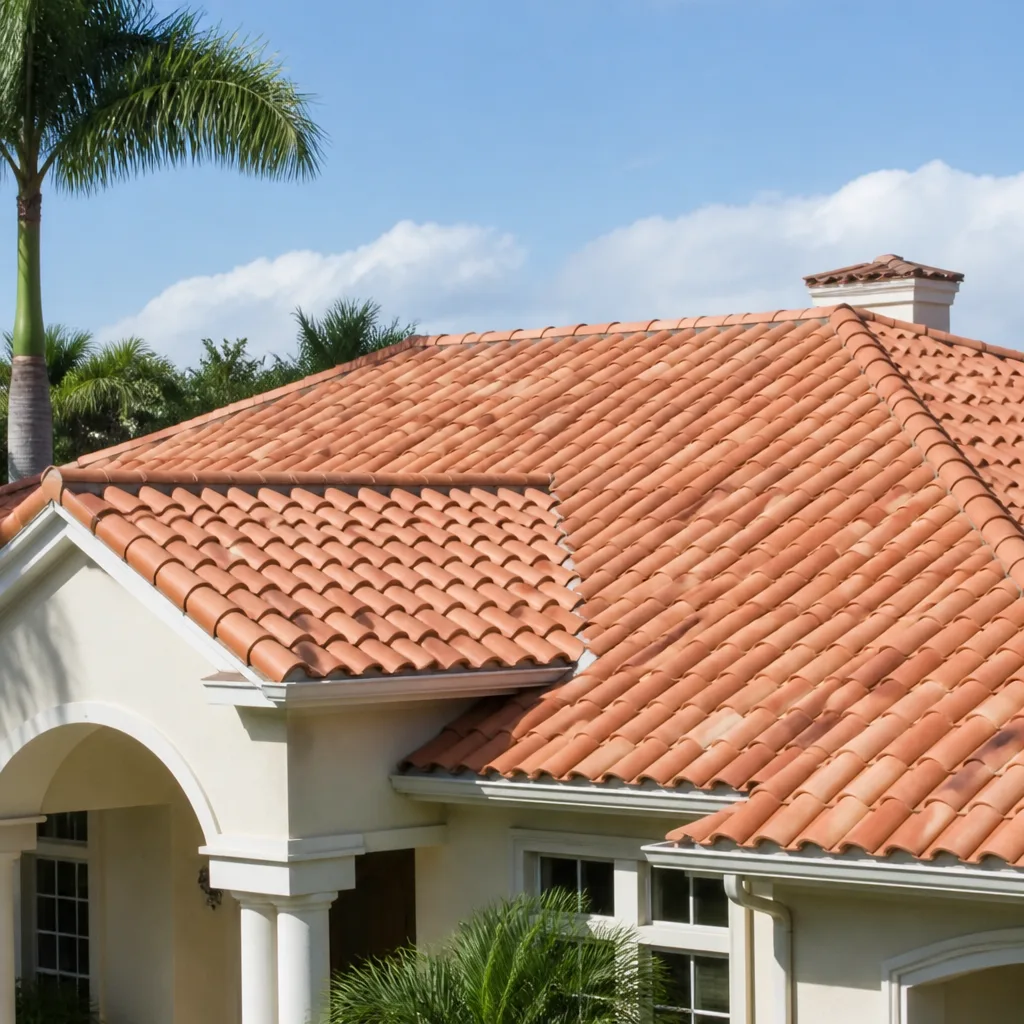 Tile roofing
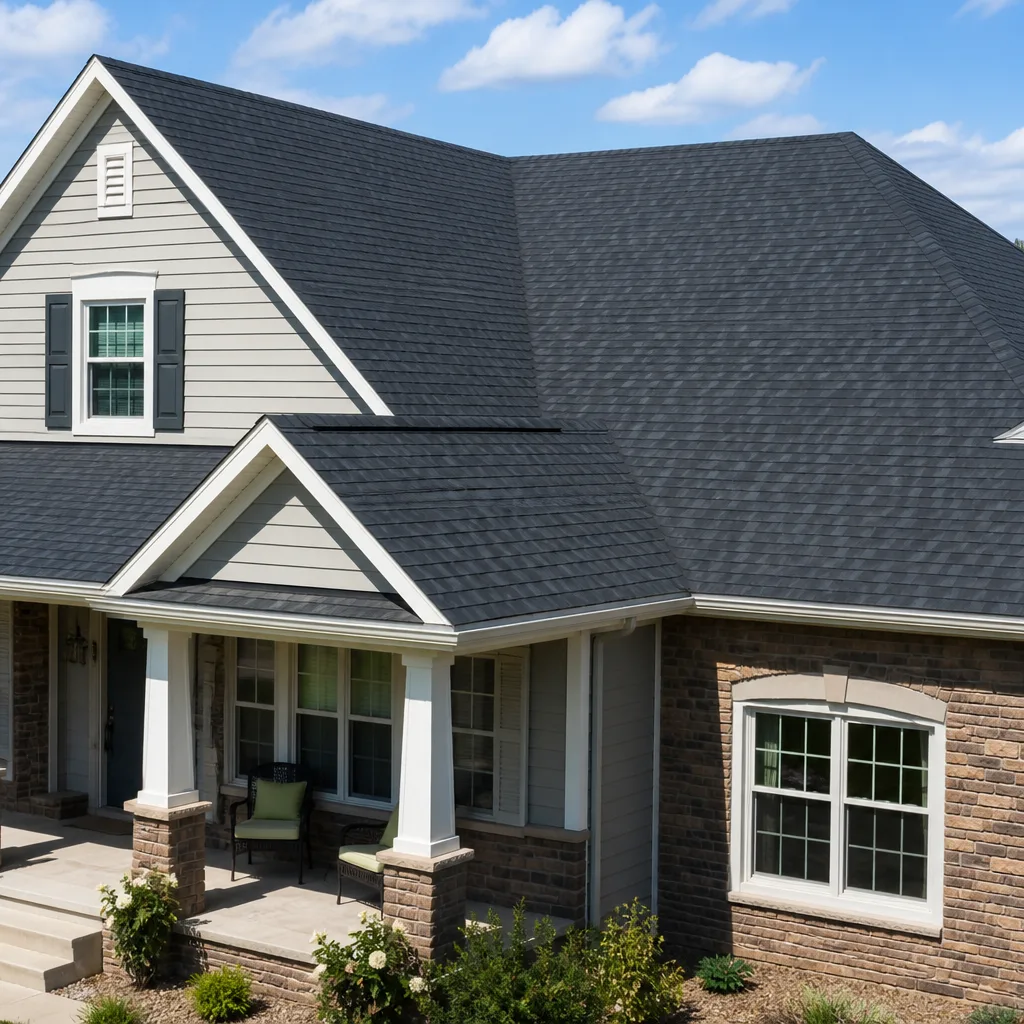 GAF
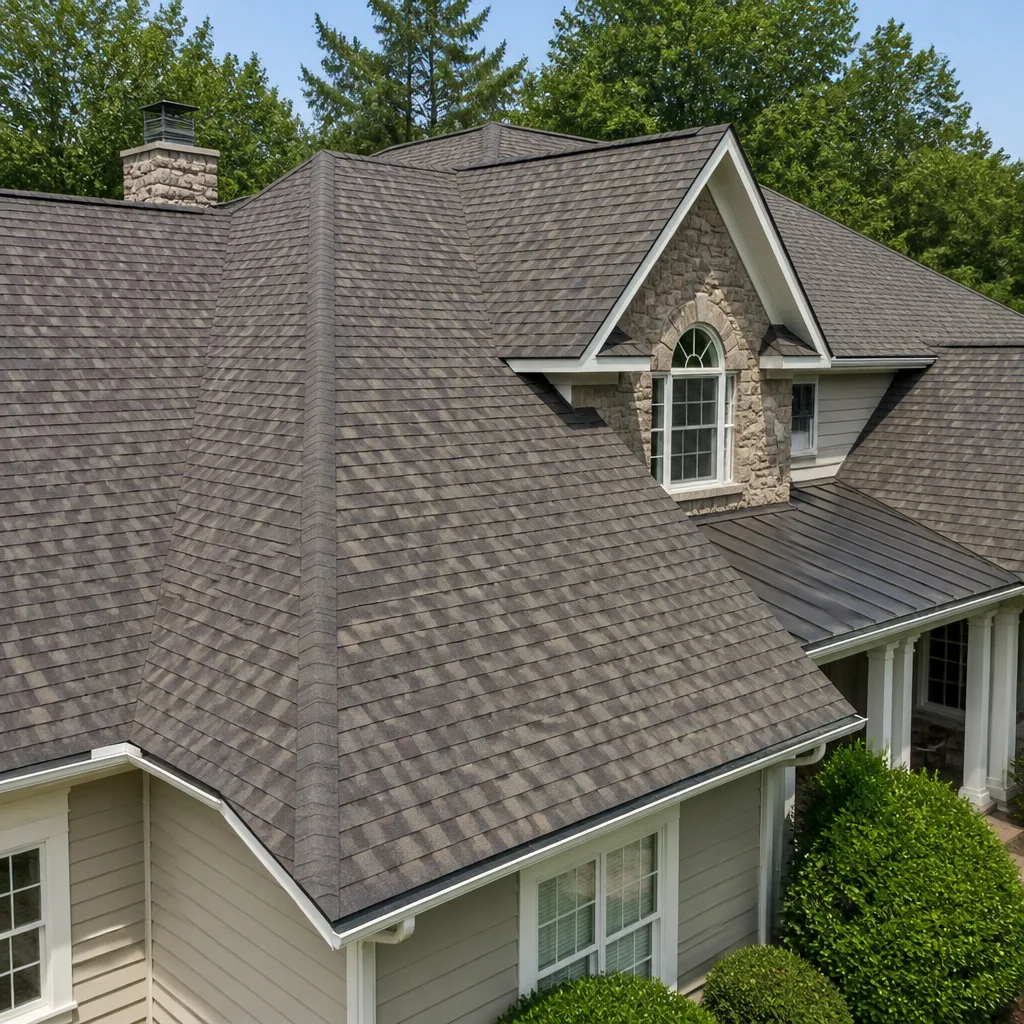 Owens Corning
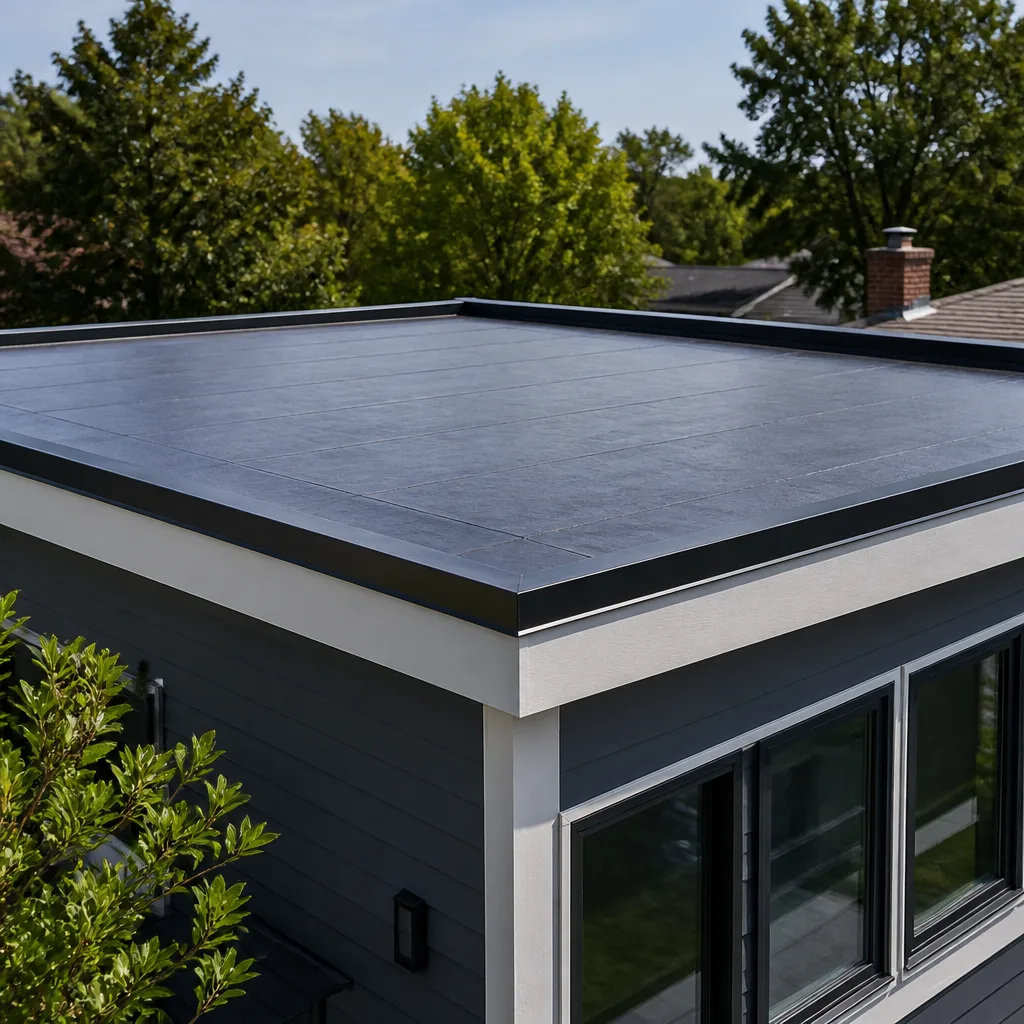 Flat & low-slope
Free roof inspection with deck photos before we talk money - GAF and Owens Corning certified installation
The Complete Guide to Roofing in Koreatown
Koreatown is one of the densest neighborhoods in Los Angeles, packing roughly 120,000 people into less than three square miles. That density shows up on the rooftops. Within a single block, you’ll find a 1920s wood-frame bungalow with a steep shingle roof sitting next to a 1960s stucco apartment building with a flat tar-and-gravel surface. Most roofing guides ignore this reality. This guide is written for Koreatown specifically: the building types, the microclimate, the code requirements, and the logistical realities of roofing in a neighborhood where parking a dumpster is harder than installing the roof itself. For The Complete Roof Repair Guide for Koreatown Homeowners and more guides & resources, see our blog.
Styles & brands we work with
Quick Answer
Roofing in Koreatown is not one-size-fits-all. Your roof type, your building’s age, and LA’s Title 24 cool roof requirements determine the right material and approach. Most decisions come down to three factors: pitched versus flat roof, single-family versus multifamily, and whether your building predates modern sheathing standards. Every roof in Koreatown falls somewhere on that spectrum, and every one has a correct answer.
Table of Contents
- Understanding Koreatown’s Roof Types
- Title 24 and Cool Roofs in Koreatown
- Seismic Bracing and Roof Deck Integrity
- Material Options: Which Roofing Products Fit Which Buildings
- Staging, Permits, and Logistics in a Dense Neighborhood
- How to Read a Koreatown Roof’s History
- What Roofing Costs in Koreatown: A Realistic Range
- Common Mistakes to Avoid
- When to Call a Professional
- Frequently Asked Questions
Understanding Koreatown’s Roof Types
Koreatown’s building stock falls into three broad categories, and each requires a completely different roofing approach. The neighborhood’s original development happened in the 1920s and 1930s, when single-family bungalows and small courtyard apartments dominated. The 1950s through 1970s brought mid-rise apartment buildings and commercial corridors along Wilshire, Olympic, and Western. The past two decades added mixed-use construction with residential units above retail.
Here’s what that means for your roof:
- Pitched shingle roofs dominate the single-family bungalows and early duplexes, especially in the blocks south of Beverly and north of Pico. These are typically wood-framed with composition shingles or, less commonly, clay tile. They are the most straightforward to replace, but many have underlying decking that dates to the original construction.
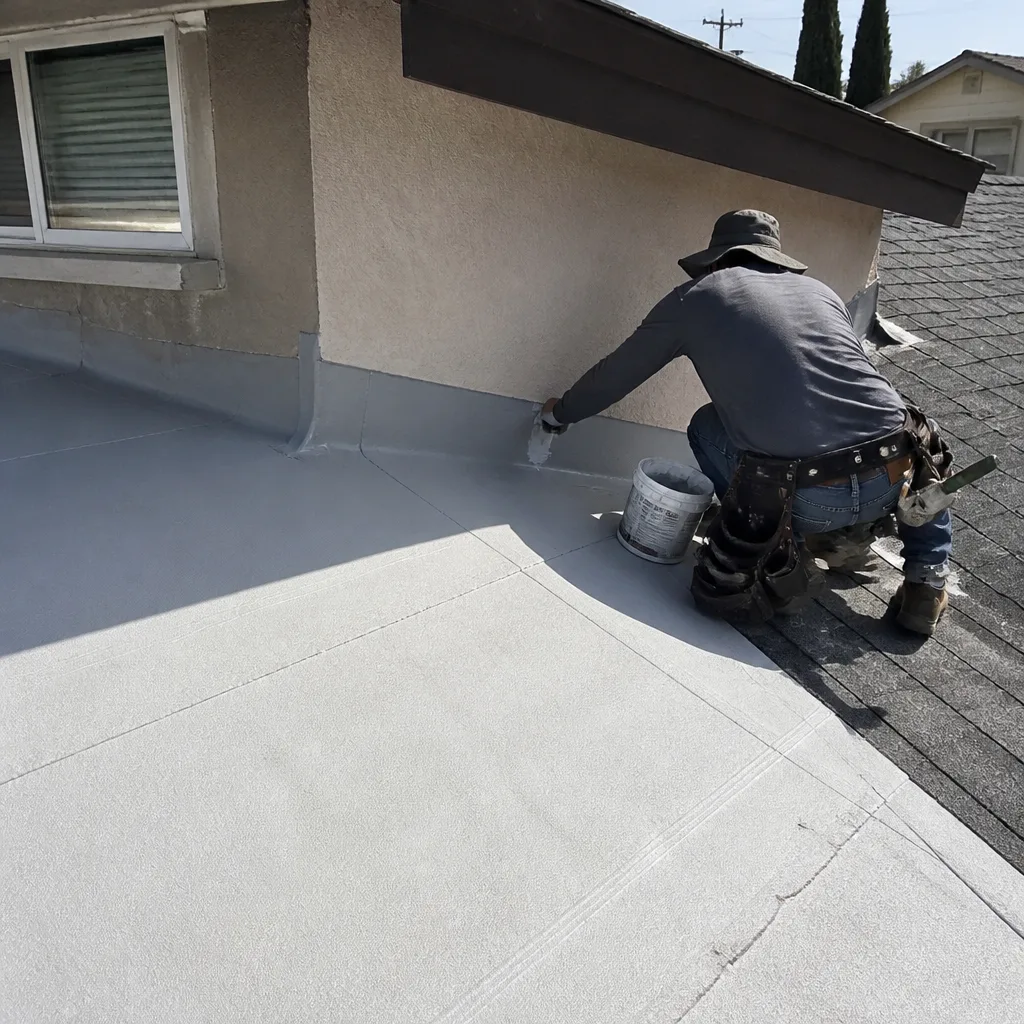
- Flat and low-slope roofs cover most of the apartment buildings and mixed-use structures. These are the majority of Koreatown’s roof square footage, even though they get less attention than their pitched neighbors. Flat roofs here are typically built-up tar-and-gravel, modified bitumen, or, on newer buildings, single-ply membranes like TPO.
- Mixed-slope commercial-residential roofs appear on buildings with a storefront at street level and apartments above. These often have flat sections over the retail footprint and pitched sections over the residential wings, requiring a contractor who understands both systems.
The practical takeaway: a roofer who only does shingles cannot properly assess a flat-roof apartment building, and vice versa. In our experience inspecting Koreatown properties, the most common problem we see is a pitched-roof specialty company attempting a flat-roof repair and missing the drainage details that cause recurring leaks.
Title 24 and Cool Roofs in Koreatown
Koreatown sits in one of LA’s most pronounced urban heat islands. Dense mid-rise construction, wide asphalt streets, and limited tree canopy push summer temperatures several degrees above surrounding neighborhoods. California’s Title 24 building energy efficiency standards acknowledged this reality by requiring cool roofs on most new construction and on re-roofing projects where the roof deck is being replaced, not just recovered.
For a Koreatown property owner, this means:
- Flat and low-slope roofs must meet a minimum solar reflectance index (SRI). The specific number depends on the roof slope and building type, but the practical effect is that light-colored or reflective membrane products are the default choice for flat roofs, not dark asphalt.
- Pitched residential roofs have flexibility, but the cooling benefit of a lighter shingle color is significant in Koreatown’s microclimate. We’ve measured surface temperature differences of over 40 degrees between dark and light shingles on neighboring bungalows on the same August afternoon.
- HOA-governed buildings on Koreatown’s eastern edge may have architectural guidelines that interact with Title 24 requirements. Some HOAs have historically required specific shingle colors that no longer meet current cool roof standards, and boards are still catching up.
The right approach is to treat Title 24 not as a bureaucratic hurdle but as a financial reality. A cool roof measurably reduces air conditioning load in a dense, heat-retaining neighborhood like Koreatown. The energy savings compound over the 20 to 30 year life of most modern roofing products.
Seismic Bracing and Roof Deck Integrity
Koreatown sits in a seismically active zone, and many of its buildings were constructed before modern sheathing and bracing standards existed. The 1994 Northridge earthquake exposed weaknesses in older wood-framed buildings throughout central LA, and subsequent retrofits have been inconsistent across private residential stock.
What this means for a roofing project:
- The roof deck is the structural base. Before any new roofing material goes on, the decking, usually plywood or OSB on newer buildings or spaced board sheathing on pre-1960 construction, must be checked for movement, rot, and proper fastening to the rafters or trusses.
- Older buildings often have inadequate shear transfer at the roof-to-wall connection. During a roof replacement, this is the moment to add or upgrade seismic clips and fasteners. It’s a relatively low-cost addition during an open roof project and enormously more difficult later.
- Chimneys and parapets on older Koreatown buildings are common failure points. Unreinforced masonry chimneys on 1920s bungalows and parapet walls on 1960s apartment buildings both have documented seismic vulnerabilities.
We recommend that any roof replacement on a pre-1980 Koreatown building include a structural assessment of the deck and connection points. This is not something a fly-by-night crew will do. It’s also why we approach every project with what’s already there, before discussing what goes on top.
Material Options: Which Roofing Products Fit Which Buildings
Koreatown’s varied building stock means the material conversation should start with the building, not with a brand. This is where genuine choice matters. We work with seven manufacturers (GAF, CertainTeed, Owens Corning, IKO, Atlas, Tamko, and Boral) because no single brand produces the right product for every Koreatown roof type. Here’s how we think through the options.
Pitched Single-Family Roofs: Composition Shingles
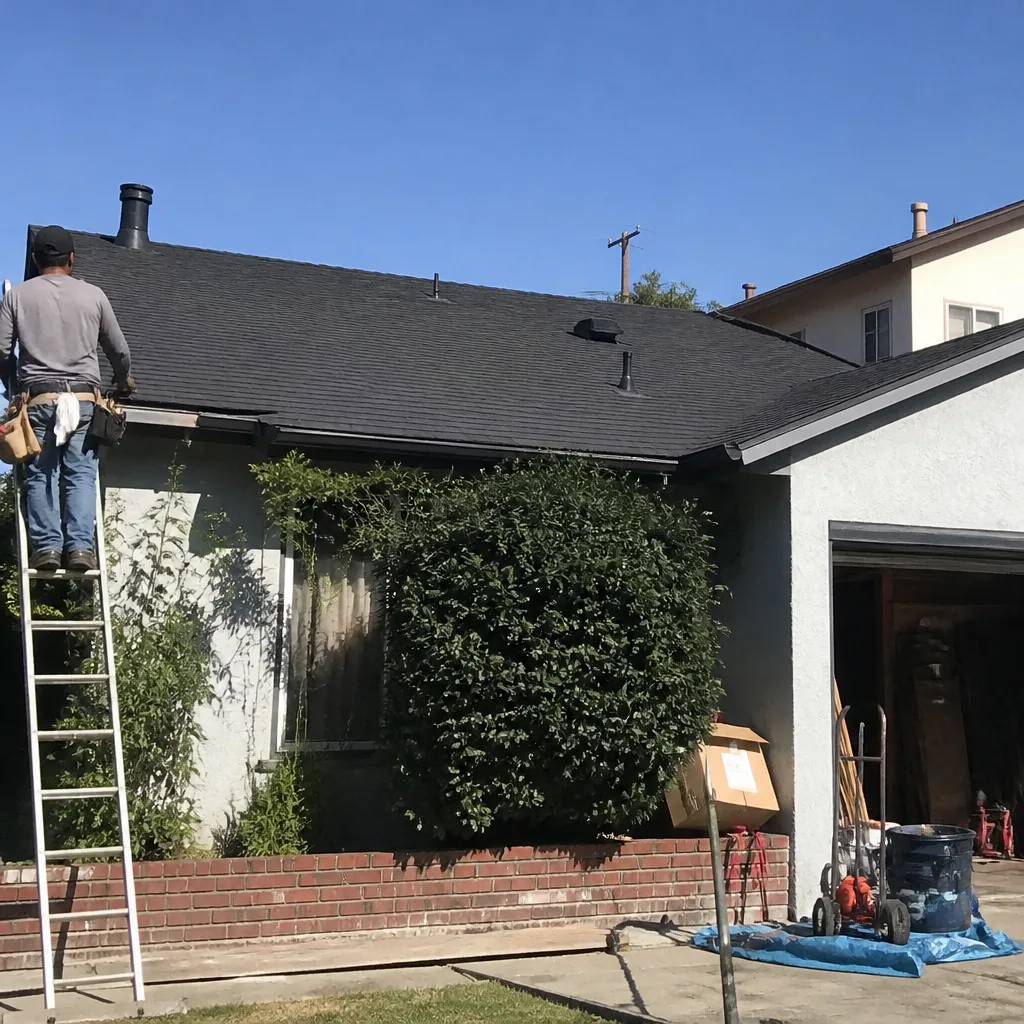
For Koreatown’s bungalows and early duplexes, architectural composition shingles remain the workhorse. Within this category, GAF and CertainTeed both produce products that perform well in coastal-adjacent climates with UV exposure and occasional heavy rain. The distinction matters less at the brand level and more at the product tier: entry-level three-tab shingles, mid-grade architectural shingles, and premium designer shingles each have different lifespans, wind ratings, and aesthetic profiles.
For homeowners who want the classic look of the neighborhood’s original roofs with modern performance, Boral’s stone-coated steel products replicate the appearance of tile or shake without the weight. This matters on older Koreatown homes whose framing was never designed to support heavy clay tile.
Flat and Low-Slope Roofs: Membrane Systems
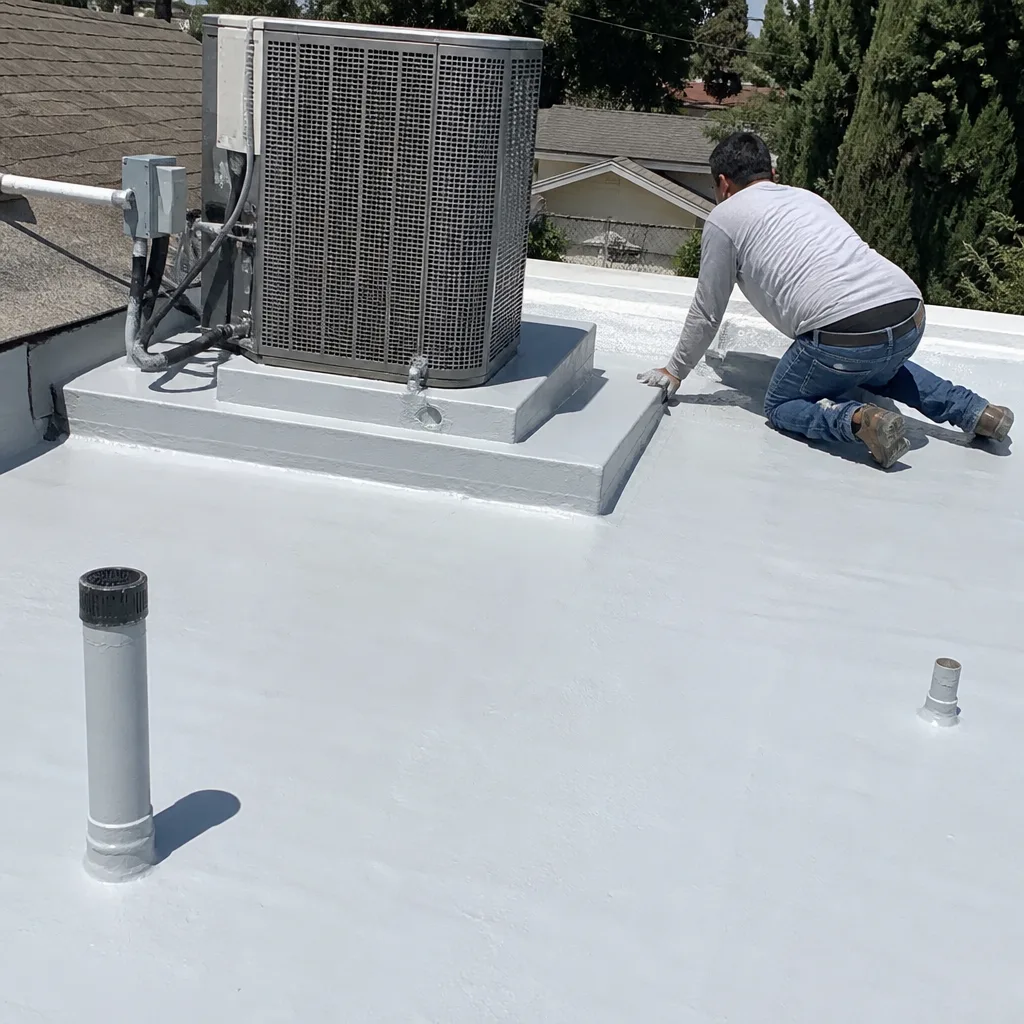
Flat roofs need membrane systems, not shingles. The two most common options are modified bitumen, a rolled asphalt product torched or adhered to the deck, and single-ply membranes like TPO, a white reflective thermoplastic. For Koreatown’s apartment buildings, TPO has become the default for one reason: it meets Title 24 cool roof reflectance requirements out of the box.
Tamko, better known in the shingle space, also produces modified bitumen products that perform well on Koreatown’s smaller apartment buildings where a torch-down system fits the budget better than a full TPO replacement.
Tile and Specialty Roofs
A handful of Koreatown’s historic and high-end properties feature clay or concrete tile. These roofs can last 50 years or more, but the underlayment beneath the tile degrades on a 20 to 30 year cycle. The correct repair is almost always to lift the existing tile, replace the underlayment, and reset the tile, not to tear off a functioning tile roof.
The principle across all of this: material choice should be driven by the building’s structure, slope, exposure, and budget. Your roof, your material choice, and a roofer who can actually explain the tradeoffs between seven brands rather than pushing one.
Staging, Permits, and Logistics in a Dense Neighborhood
Roofing in Koreatown involves constraints that suburban roofers never encounter. The single most underestimated factor is staging space. Most Koreatown streets are narrow, permit-parking-only, and lined with cars on both sides. Parking a dumpster, a material delivery truck, and a roofing crew’s vehicles within a reasonable distance of the building is a genuine project-planning challenge.
Here’s what a realistic Koreatown roofing project timeline and permit plan looks like:
- Permit review and approval. LADBS typically takes 2 to 6 weeks for a residential re-roof permit, depending on scope and whether the building has any open violations. Multifamily and mixed-use buildings are on the longer end of that range.
- Parking and staging permits. Many Koreatown blocks require temporary no-parking permits for construction vehicles and dumpsters. These are pulled from LADOT and can add a week of lead time.
- Material delivery. On a shingle roof, shingles are heavy and bulky. For a flat roof, membranes arrive in rolls. In either case, the delivery needs a place to land, which often means coordinating with neighbors or the HOA.
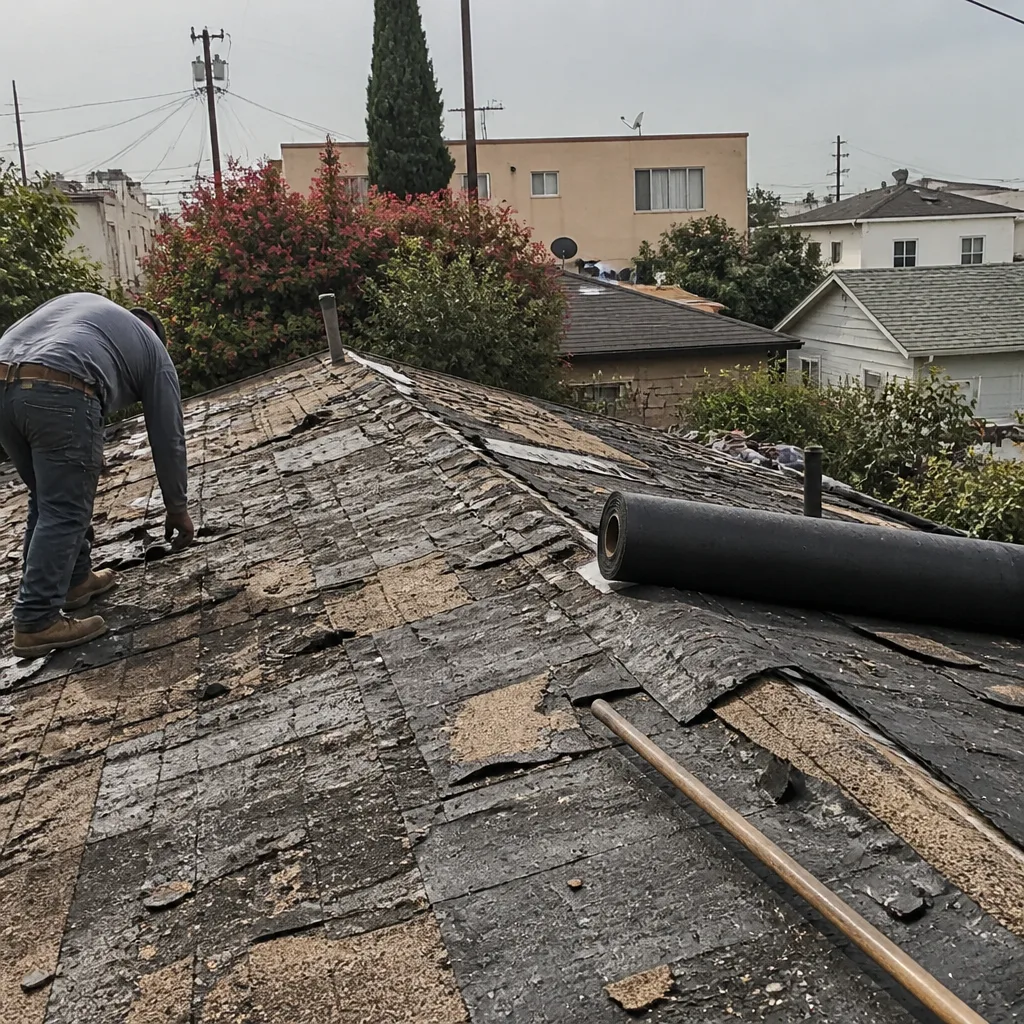
- Demo and installation. A straightforward single-family roof replacement typically takes 2 to 4 working days on the roof itself. Larger flat roofs on apartment buildings can run 1 to 3 weeks depending on square footage and weather.
- Inspection and closeout. LADBS sends an inspector to verify the install before final sign-off. This is the step that many low-bid crews skip, and skipping it creates title problems later.
The density reality extends to shared walls. Many Koreatown buildings have zero setback between structures. That means roofing work on one building can affect its neighbor’s parapet, flashing, or drainage. A contractor who understands Koreatown’s specific lot patterns will account for this before work starts.
How to Read a Koreatown Roof’s History
Before you sign any roofing contract in Koreatown, look up the property’s permit history. Los Angeles Department of Building and Safety maintains an online portal where every permitted roof project is documented. This is not insider knowledge; it’s a public record that most property owners simply never check.
Here’s the step-by-step for reading that history:
- Search the LADBS Building Records portal by address. Look for permits referencing “reroof,” “roofing,” or “roof repair.”
- Note the permit date. Composition shingle roofs are typically permitted for a 15 to 30 year lifespan depending on the product. If the last permit was 28 years ago, you are at the end of the roof’s service life regardless of how it looks from the street.
- Check whether the final inspection was signed off. An open permit from a roofing project that was never finalized can block a sale or refinance. This is one of the most common issues we flag during Roof Inspection in Koreatown.
- Look for patterns. Multiple roof repairs in a short period often indicate a deeper drainage or decking problem that patch repairs never addressed.
- Verify any HOA involvement for multifamily or condo properties. The building’s master policy and roofing responsibility boundaries need to be clear before a unit owner spends money.
This level of diligence separates a thoughtful roofing decision from a reactive one. It also prepares you to have an informed conversation with any contractor about what the building actually needs.
What Roofing Costs in Koreatown: A Realistic Range
Roofing prices in Koreatown run higher than LA’s suburban average for one dominant reason: logistics. Dumpster placement, parking permits, tight staging areas, and the extra time required to protect adjacent structures all add cost. Here’s a realistic range for common Koreatown roof projects.
- Small flat-roof repair: $450 to $1,200, depending on whether the issue is a single penetration or a broader membrane failure.
- Single-family shingle roof replacement: $9,000 to $18,000 for an average 1,200 to 1,800 square foot Koreatown bungalow, with the range reflecting the shingle tier and whether deck replacement is needed.
- Apartment building flat roof replacement: $15,000 to $45,000+ depending on total square footage, number of penetrations, and whether insulation or tapered systems are required under Title 24.
- Underlayment replacement under existing tile: $8,000 to $15,000 for a typical single-family tile roof, contingent on tile condition and reuse potential.
- Full deck replacement: Add $2.50 to $4.00 per square foot on top of the roofing system cost when the existing decking is too compromised to reuse.
These are planning ranges, not quotes. The honest answer to “what will my roof cost in Koreatown” is always: it depends on what’s under the current roof, what the permit history shows, and what the building actually requires. The reliable way to get a real number is a written, line-item estimate. Koreatown Roofing provides those at no charge, with no obligation. Call (866) 974-2271 to schedule a walk-through.
Common Mistakes to Avoid
- Choosing a contractor based on price alone. Koreatown’s permit and logistics complexity means the lowest bid is often low because it skipped permit costs, staging permits, or deck evaluation. Those costs come back later, usually with interest.
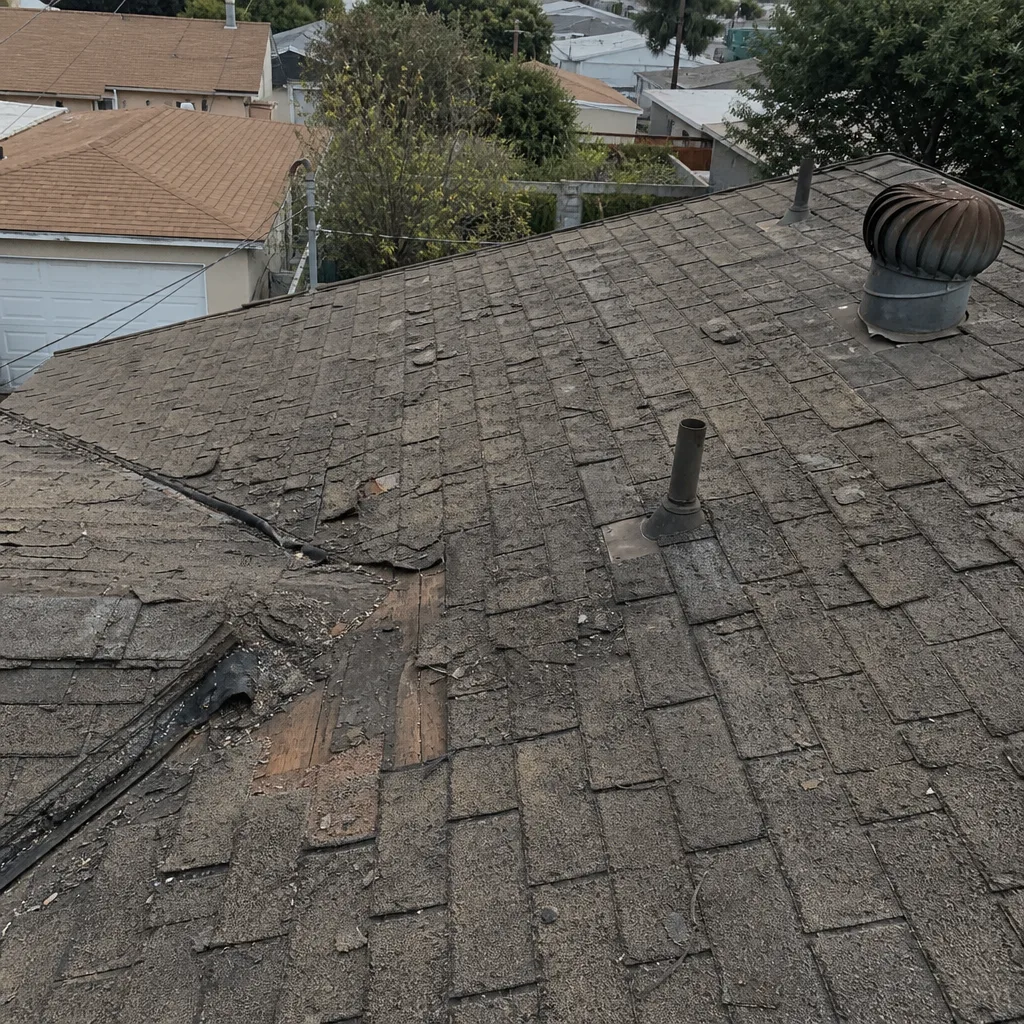
- Patching a roof that needs replacement. A 25-year-old roof with multiple active leaks is not a repair candidate. Continued patching costs more per year of useful life than a proper replacement.
- Ignoring the neighbor’s wall. On zero-lot-line Koreatown buildings, flashing details that cross property lines need to be handled correctly. Skipping this creates recurring leaks and neighbor disputes.
- Replacing a flat roof with the wrong slope profile. Flat roofs still need positive drainage. If the new membrane installs without correcting ponding issues, the new roof fails early.
- Not checking whether an HOA or condo association governs the roof. For many Koreatown multifamily properties, the roof is a common area. Individual unit owners should not contract for roof work without verifying responsibility.
- Overlooking Title 24 compliance until after the install. A non-compliant cool roof can fail inspection and require corrective work. The time to address compliance is during planning, not after the membrane is down.
- Hiring a general contractor who subcontracts the roof. You lose the direct accountability of a specialist. Koreatown Roofing is a roofing-only contractor: 100% of our jobs are roofing jobs, not a roofing crew borrowed from another trade.
When to Call a Professional
Some roofing situations are a judgment call. Others are not. You should call a professional whenever you see water staining on an interior ceiling or wall, whenever a roof repair is needed near penetrations like vents, chimneys, or skylights, and whenever the roof’s age has passed its permitted service life regardless of visible condition. For flat and low-slope roofs, even a small blister or split can channel water into the building envelope silently. For steep roofs, any sign of lifting, curling, or missing material deserves a professional assessment before wind or rain expands the problem. Koreatown Roofing offers free estimates throughout Koreatown. Call (866) 974-2271 and we’ll walk the roof with you.
Frequently Asked Questions
A single-family shingle roof replacement in Koreatown typically runs $9,000 to $18,000 depending on size, shingle tier, and deck condition, while flat apartment roof replacements start around $15,000 and run upward from there. The wide range reflects the neighborhood’s varied building stock and the structural realities underneath the old roof. Call (866) 974-2271 for an exact quote; estimates are free.
Flat and low-slope roofs dominate Koreatown’s multifamily and mixed-use buildings, while pitched shingle roofs are typical on the neighborhood’s single-family bungalows. Each type requires different materials and different contractor expertise, and a specialist should evaluate which system applies to your specific property.
If you are replacing the roof deck or installing a new roof on a low-slope building in Koreatown, Title 24 cool roof requirements almost certainly apply, and your roofing material must meet a minimum solar reflectance index. If you are only recovering the existing roof without replacing the deck, the specific threshold varies by building type and slope.
Most single-family roof replacements in Koreatown take 2 to 4 days on the roof itself, with additional weeks for permitting and staging permits. Flat roof projects on larger apartment buildings typically run 1 to 3 weeks. The neighborhood’s parking restrictions and tight staging areas add planning time that suburban roofer timelines don’t reflect.
The answer comes down to age, deck condition, leak history, and the look of the underlying structure. If the roof has passed the warranty period of its original installation and is leaking in multiple locations, repair is a losing financial position. A proper Roof Repair in Koreatown can stop a small problem early and extend a healthy roof’s life.
Yes, Los Angeles requires a permit for most roof replacements and for repairs beyond minor surface patching. Working without a permit can jeopardize a future sale or refinance, and it means the work was never inspected by LADBS.
We install products from seven industry-leading manufacturers: GAF, CertainTeed, Owens Corning, IKO, Atlas, Tamko, and Boral. This means our recommendation is driven by what fits your building, not by what a single supplier happens to stock. For a full walk-through of the options, see our Roof Replacement in Koreatown page.
The Bottom Line
Koreatown’s roofs are as varied as its buildings, and no generic roofing guide can account for the neighborhood’s specific mix of bungalow shingle roofs, apartment flat roofs, and mixed-use hybrid structures. The right roofing decision starts with understanding your building type, checking LADBS permit history, accounting for Title 24 cool roof requirements, and working with a contractor who does roofing and only roofing. Koreatown Roofing was built to serve this neighborhood with real material choice across seven manufacturers, three focused services covering every stage of a roof’s life, and the accountability that comes from being a neighborhood business, not a call center. For a free estimate anywhere in Koreatown, call (866) 974-2271 or visit the Koreatown Roofing home page.
Written by the team at Koreatown Roofing, serving Koreatown since 2014.
See the difference
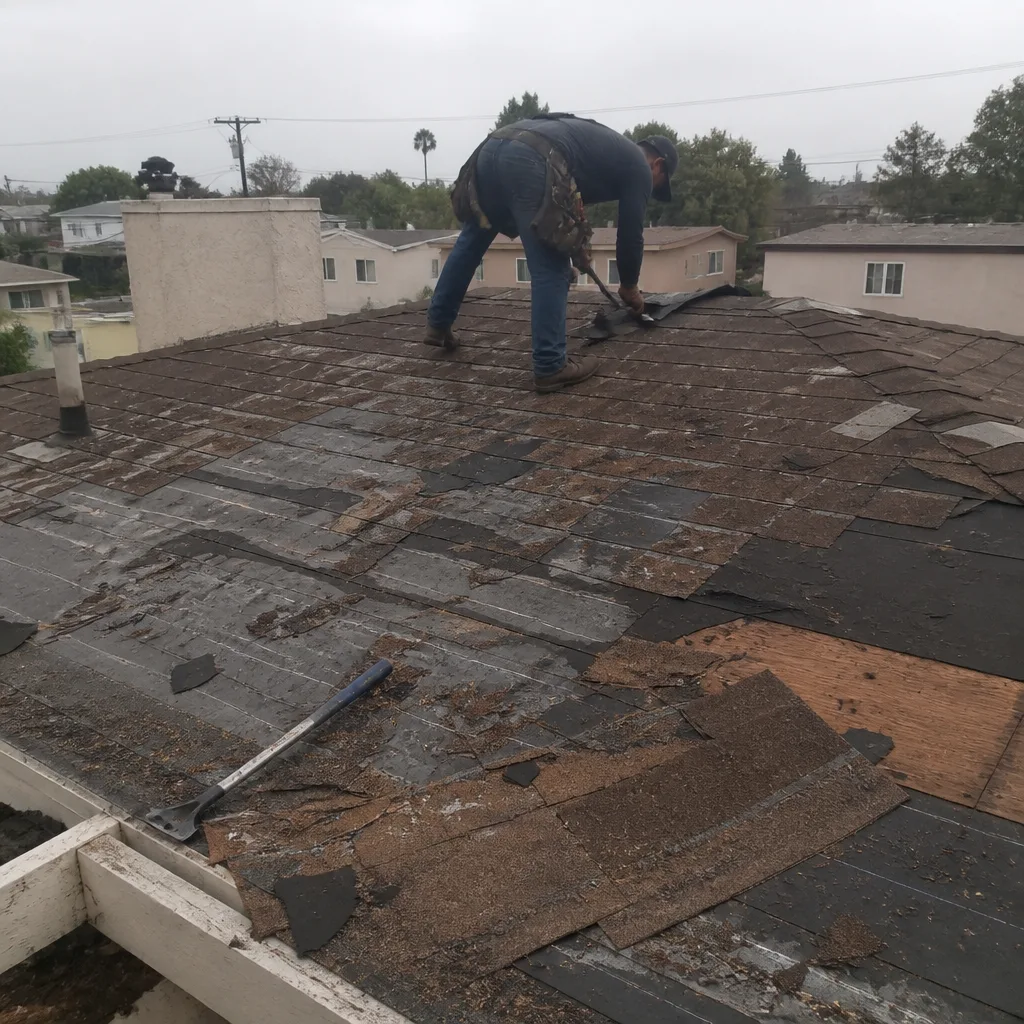 Before
 After
 Before
 After
 Before
 After