
Last updated October 30, 2026
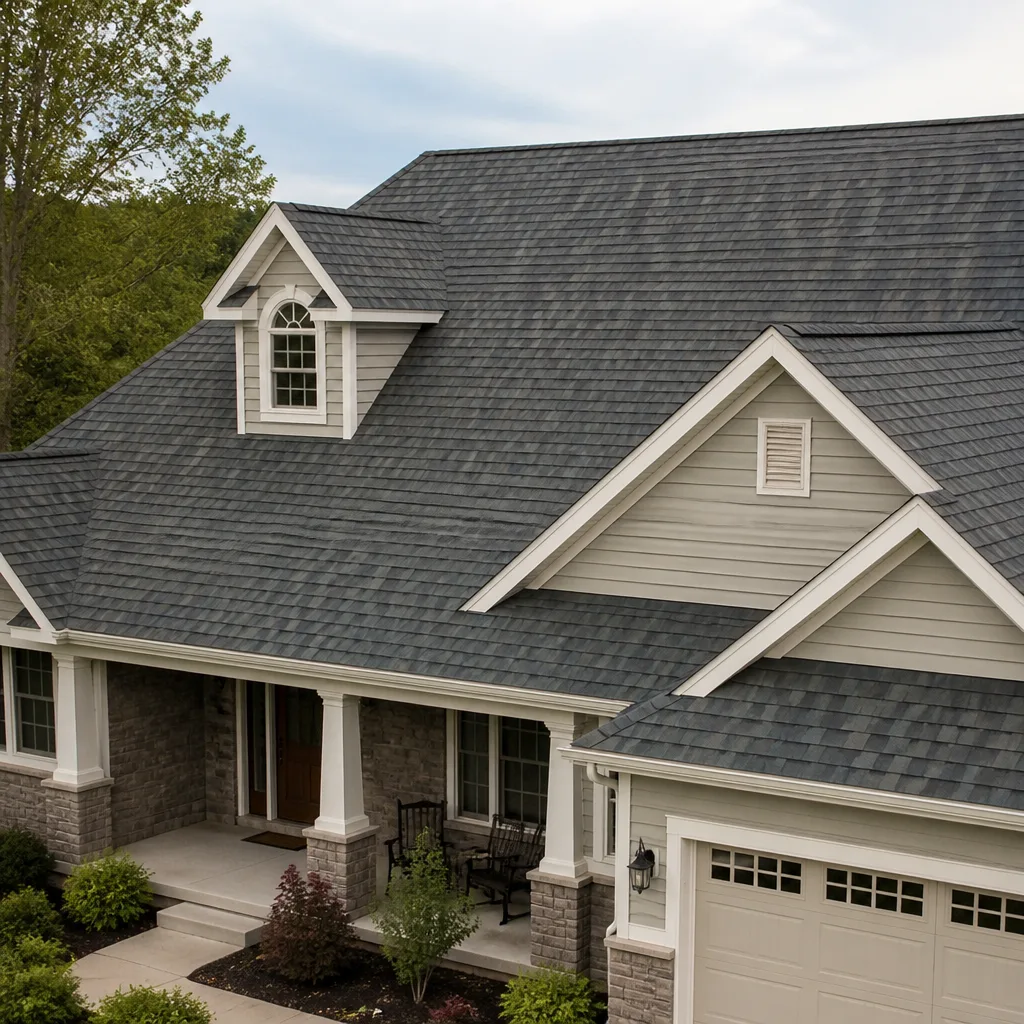 Architectural shingles
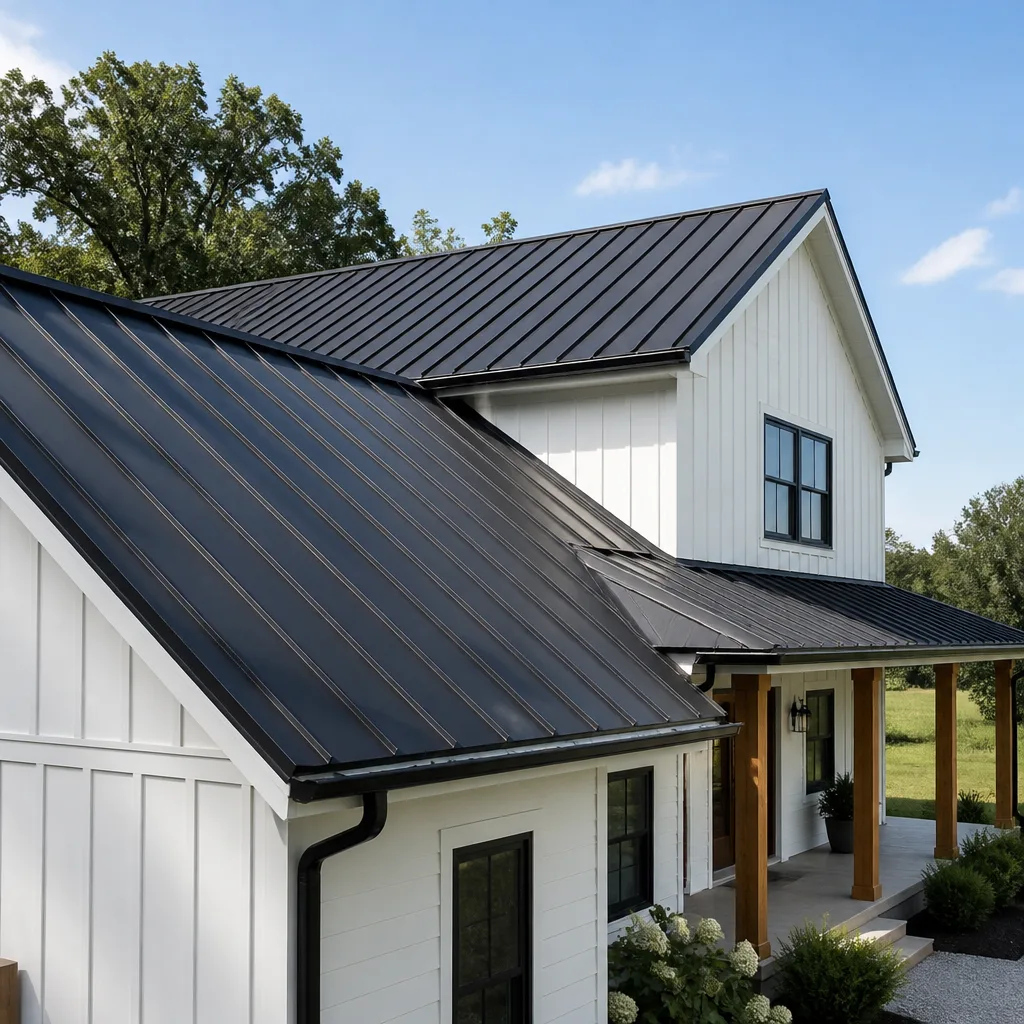 Metal roofing
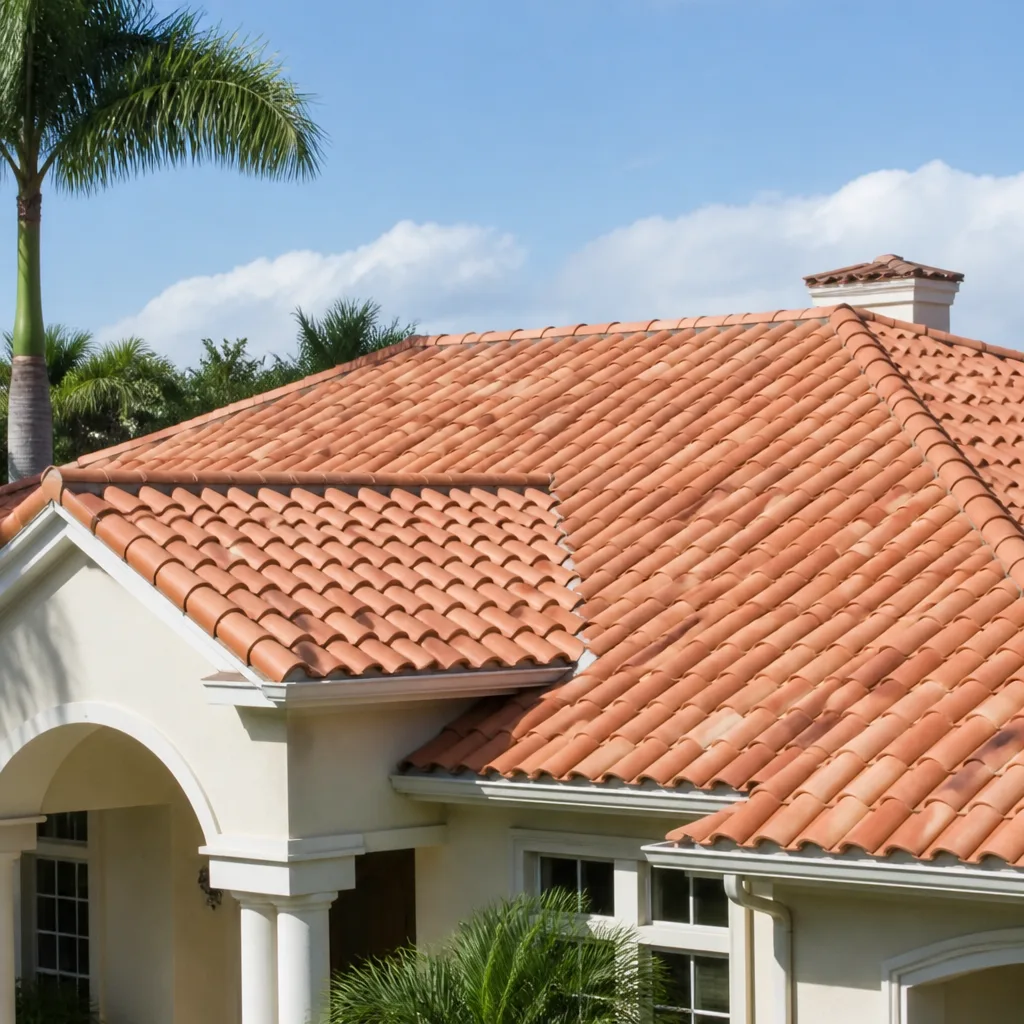 Tile roofing
 GAF
 Owens Corning
 Flat & low-slope
Free roof inspection with deck photos before we talk money - GAF and Owens Corning certified installation
The Complete Roof Repair Guide for Koreatown Homeowners
Most roof repair guides assume you have a detached suburban house with a driveway and a 6/12 pitch. If you own a bungalow court, a stucco apartment building, or a mixed-use property near Wilshire, those guides were not written for you. Koreatown’s housing stock is different – dense, often flat-roofed, frequently attached to neighboring structures, and built during eras when roofing materials were chosen for a climate that no longer behaves quite the same way. This guide walks through what actually causes roof failures on these blocks, what repairs cost in this market, and how to approach the work without getting taken advantage of. We’ve repaired roofs across Koreatown for over a decade, and the lessons here come from what we see on actual job sites, not from a generic template.
Quick Answer
Roof repair in Koreatown typically costs between $400 and $1,800 depending on the roof type, the extent of the damage, and whether access is complicated by a shared wall or a tight lot. Low-slope modified bitumen roofs – the most common type on Koreatown apartment buildings and older duplexes – usually need patching, seam resealing, or flashing replacement rather than a full tear-off. The smart move is to get a professional roof inspection first, because most Koreatown roof failures start small: a cracked flashing, a clogged drain, or a seam that opened during a Santa Ana wind event. For larger issues, explore our Roof Repair services to see what’s involved.
Styles & brands we work with
Table of Contents
- The Roof Types You Actually Have in Koreatown
- What Roof Repair Costs in Koreatown
- Permit Realities for Roof Work in the City of LA
- Access and Staging Challenges on Dense Urban Lots
- Why Santa Ana Winds Matter More Than Rain
- How to Document Repairs for an LA County Insurance Claim
- Common Mistakes to Avoid
- When to Call a Professional
The Roof Types You Actually Have in Koreatown
Koreatown is not a suburb. The neighborhood’s building stock runs from 1920s Spanish Revival bungalows to 1960s stucco fourplexes to 1980s mixed-use buildings with retail on the ground floor and apartments above. Each era came with its own roofing approach, and each requires a different repair strategy.
If you own a property in Koreatown, your roof is most likely one of these three types:
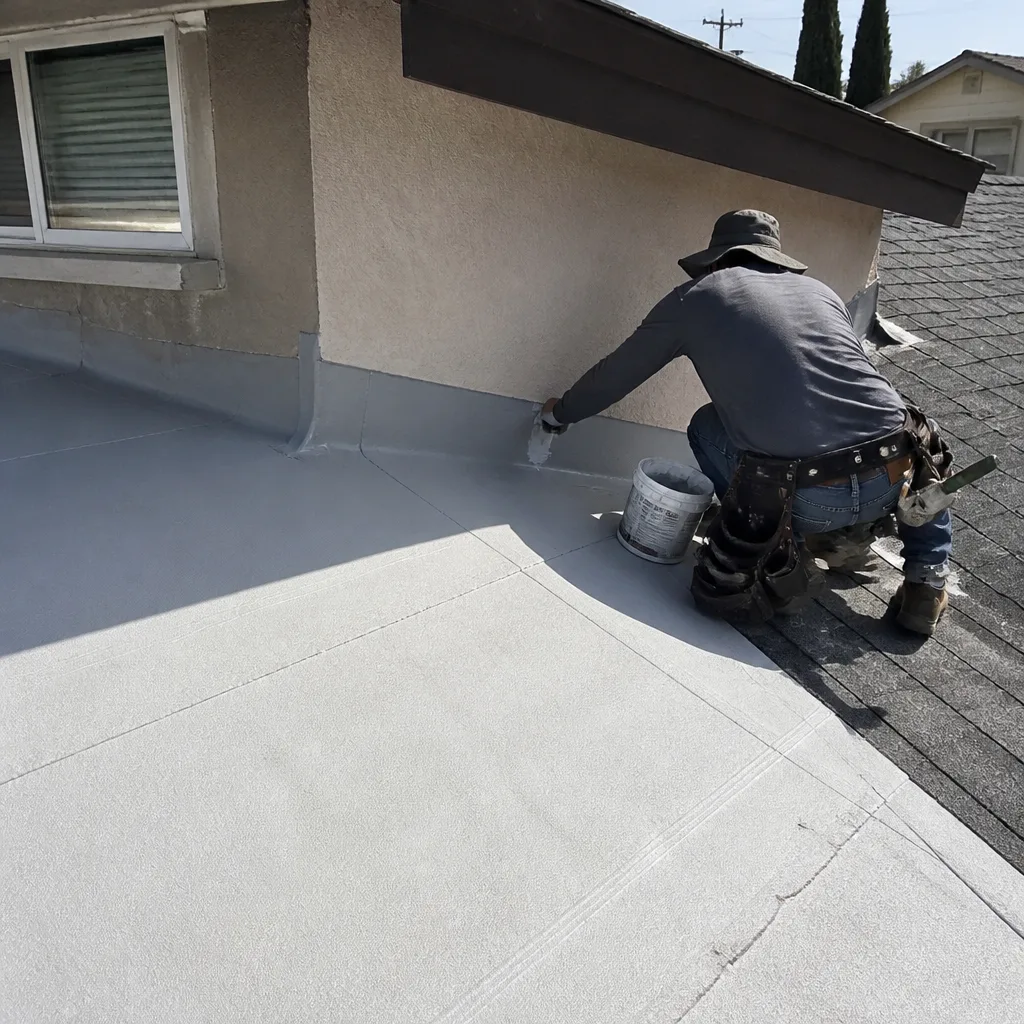
- Low-slope modified bitumen (mod bit): This is the dominant roof type on apartment buildings, duplexes, and commercial-residential mixed-use structures throughout Koreatown. Mod bit is a multi-layer asphalt-based membrane that gets torched or cold-applied over a flat or nearly flat deck. It’s durable, but it fails at the seams and flashings first. Repairs usually involve cleaning the damaged area, applying a new membrane patch, and resealing the edges. If you see bubbling or alligator cracking on a mod bit roof, the surface is oxidizing and the repair window is narrowing.
- Flat tar-and-gravel roofs: Older buildings in Koreatown – particularly pre-1970 construction – often have built-up tar-and-gravel roofs. These develop splits as the building settles and the tar becomes brittle. A repair typically means cutting out the split, applying new layers of roofing felt and asphalt, and re-graveling the area. Gravel roofs hide problems well; the gravel can look fine while the membrane underneath is failing.
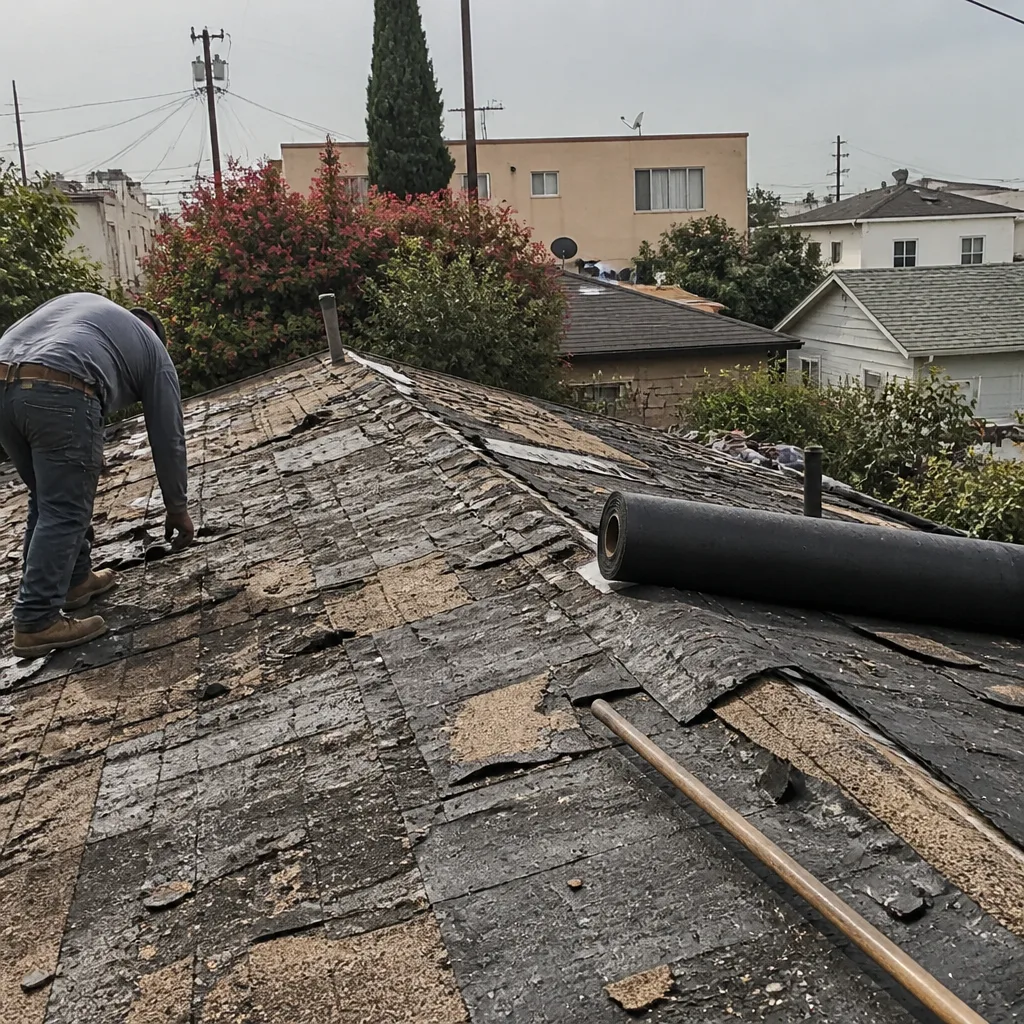
- Spanish tile on older bungalows: The 1920s and 1930s bungalows along streets like Serrano, Harvard, and Gramercy often have clay tile roofs. Tile itself lasts a long time, but the underlayment beneath it does not. When we get called out for a tile roof leak in Koreatown, the tile is rarely the problem – it’s the felt underneath that has degraded after 40 or 50 years. Repairing tile roofs means removing tiles carefully, replacing the underlayment in the affected section, and reinstalling the same tiles. This is slower work than a flat roof patch, and the labor reflects that.
Each of these roof types fails differently, and a roofer who only knows one system will misdiagnose the other two. When you hire someone, ask them which of these three Koreatown roof types you have and how they plan to repair it. If they can’t answer clearly, they’re guessing.
What Roof Repair Costs in Koreatown
Repair pricing in Koreatown runs a tighter range than most people expect. Small isolated repairs on flat roofs are relatively affordable. Larger flashing replacements or underlayment repairs on tile roofs cost more because of the labor involved in removing and reinstalling materials.
Here’s what we typically see across Koreatown roof repair jobs as of 2025:
| Repair Type | Typical Cost Range in Koreatown | What Affects the Price |
|---|---|---|
| Small mod bit patch (1-3 sq ft) | $400 – $750 | Roof access, number of stories, seam condition |
| Flashing replacement at a wall or chimney | $600 – $1,200 | Flashing material, wall type (stucco vs. wood), accessibility |
| Flat roof drain cleaning and reseal | $350 – $700 | Number of drains, whether scuppers are involved |
| Tile roof underlayment repair (small section) | $800 – $1,800 | Tile type, roof pitch, matching existing tile |
| Emergency tarp and temporary seal | $300 – $600 | Size of affected area, immediacy |
These are honest ballpark ranges for Koreatown, not locked-in quotes. Your roof, your material choice – and the final number depends on what the inspection finds. The cheapest repair quote on a flat roof usually means a roofer is going to slap membrane over a seam without properly cleaning or priming the surface first. That repair fails within a season. The expensive quote should come with a clear explanation of what’s being done and why. Never accept a quote that doesn’t specify the repair method.
One thing to understand about Koreatown pricing specifically: labor costs here are similar to the rest of central LA, but access complications – which we cover in more detail below – can add $200 to $500 to a job that would be straightforward on a suburban lot. It’s not a markup trick. It’s the reality of working on a building that’s 18 inches from the next building.
Permit Realities for Roof Work in the City of LA
The City of Los Angeles Department of Building and Safety (LADBS) draws a clear line between roof maintenance and roof replacement. Knowing which side of that line your project falls on saves you time, fines, and headaches.
Here’s the practical breakdown for Koreatown property owners:
- Small repairs usually don’t need a permit: Patching a mod bit roof, replacing a section of flashing, resealing a drain, or repairing a split in a tar-and-gravel roof are considered routine maintenance. LADBS does not require a permit for these repairs as long as you’re not changing the roof assembly or removing more than a small percentage of the roofing material.
- Partial re-roofs sometimes do: If the repair involves removing and replacing a large section of roof deck, changing the insulation, or re-covering more than a specific threshold of the roof area, you may need a permit. The threshold in LA is generally tied to whether the work is considered restorative maintenance versus alteration.
- Full roof replacements almost always require a permit: If you’re tearing off the old roof down to the deck and installing new roofing, that’s a re-roof. LADBS requires a permit. A legitimate roofing contractor will pull the permit and schedule the required inspections. If a contractor tells you they can do a full replacement with no permit, walk away – the liability lands on you as the property owner.
- Tile underlayment replacement sits in a gray area: Replacing small sections of underlayment under existing tile is usually maintenance. Replacing the entire underlayment across the whole roof often triggers the re-roof permit path. It depends on the scope and how LADBS interprets the work at the time of application.
The practical takeaway: most Koreatown homeowners who need roof repair – as opposed to replacement – don’t need a permit for the work itself. But if the repair uncovers structural damage, or if the roofer recommends expanding the scope, the permit conversation starts. Any roofer who is comfortable walking you through these LADBS requirements is a roofer who has done this work in Koreatown before. For additional context, see our How to Hire a Roofing Contractor in Koreatown: A Step-by-Step Guide.
Access and Staging Challenges on Dense Urban Lots
Koreatown lots are tight. That’s not a complaint – it’s what makes the neighborhood what it is. But it has real consequences for roof repair logistics, and it’s one of the biggest reasons suburban roof repair guides don’t translate here.
A typical single-family home in the Valley has a driveway, a garage, and a yard where a roofer can set up ladders, lay out materials, and park a truck. A typical Koreatown apartment building has none of that. The building fills most of the lot. The alley, if there is one, is narrow. The street might be permit parking only. The building next door shares a wall or comes within a few feet.
Here’s what that means on the ground:
- Ladder placement gets creative: On many Koreatown buildings, the only way to reach the roof is through an interior access hatch, which means materials go up through the building, not over the side. This takes longer and requires more care to protect the interior during the process.
- Street parking for the work truck isn’t guaranteed: Koreatown street parking is competitive. A roofer may need to park a block away and ferry materials. That adds labor time, which adds cost. If you have a parking spot on your property, offer it to the roofer – it saves everyone money.
- Shared walls complicate flashing work: When two buildings share a wall, the flashing where the roofs meet belongs to both properties. A repair that involves that common wall requires at least notifying your neighbor, and sometimes coordinating access. In Koreatown, we’ve seen disputes over shared wall flashing delay repairs by weeks. If your roof leak is near a shared wall, start the neighbor conversation early.
- Material staging happens on the roof itself: Without a yard or driveway, materials get staged on the roof. For a flat roof, this is manageable. For a sloped tile roof, it requires more setup and safety equipment, which again shows up in the labor line.
This is why Koreatown roof repair quotes sometimes look higher than what a friend in a single-family home paid for “the same repair.” It’s not the same repair. The roof might be the same size, but the job site is completely different.
Why Santa Ana Winds Matter More Than Rain
Ask a Koreatown homeowner what damages roofs, and most will say rain. They’re half right. In our experience across hundreds of Koreatown roofs, the Santa Ana wind events that funnel through the LA Basin in the fall are the more common trigger for the failures that eventually cause leaks.
Santa Anas are hot, dry winds that blow from the high desert toward the coast. In Koreatown, a typical Santa Ana event brings sustained winds of 20 to 40 mph with gusts that can exceed 60 mph. The wind hits flat roofs differently than sloped ones. It lifts membrane edges, works flashings loose, and finds any seam that wasn’t perfectly sealed. A mod bit seam that was holding fine through the summer can open during a single strong Santa Ana night.
The specific failure points we see after Santa Ana events in Koreatown:
- Edge metal and drip edges lift or loosen: Flat roofs rely on metal edging to keep the membrane pinned down. Wind gets under the edge, works it loose, and the next rain gets inside.
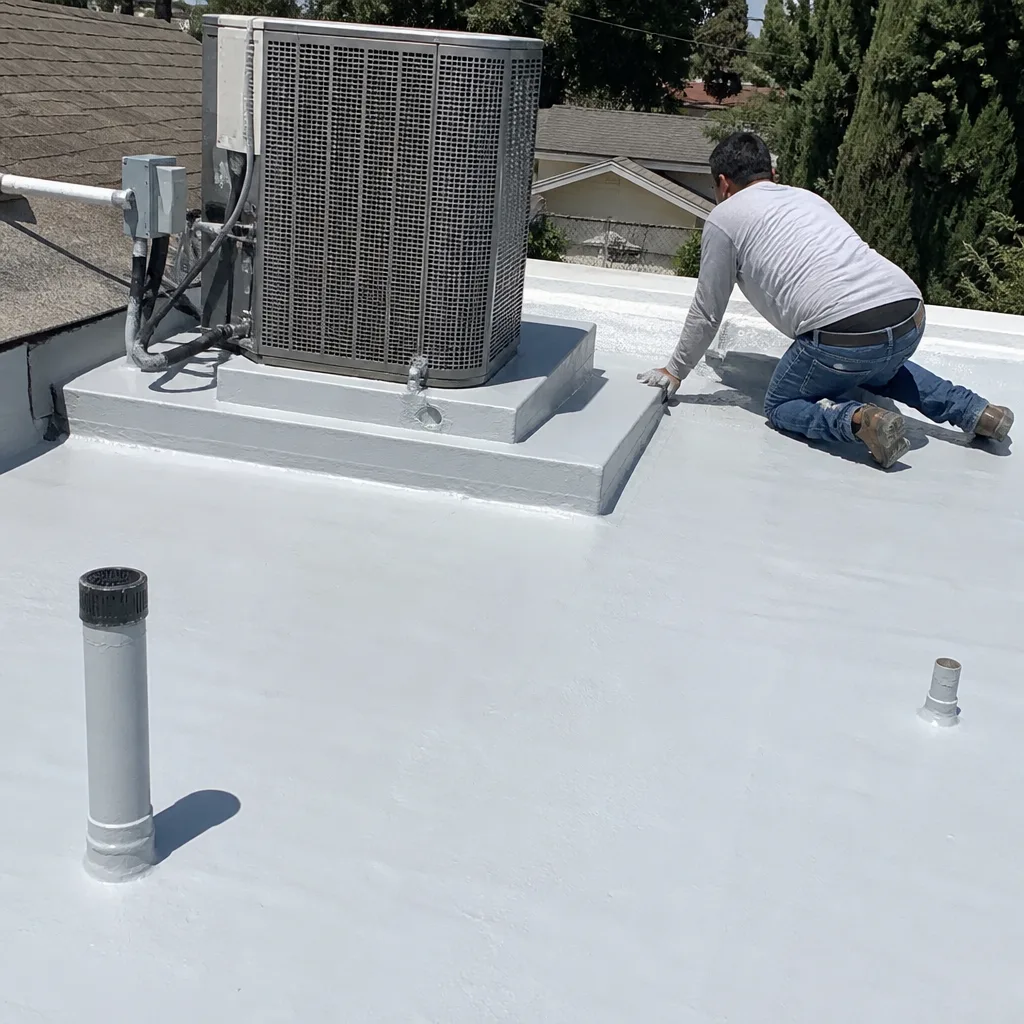
- Flashing at penetrations cracks or separates: Vent pipes, HVAC curbs, and skylight curbs are all wind-vulnerable. The flashing around these penetrations takes the full force of the wind and flexes with each gust.
- Gravel displacement on tar-and-gravel roofs: Strong winds blow gravel off the roof surface, exposing the asphalt membrane to UV damage. Within a season, an exposed area can develop splits.
- Tile roofs lose broken or loose tiles: A Santa Ana gust can send a loose Spanish tile off the roof entirely. Once a tile is missing, the underlayment below takes direct sun and rain exposure.
The practical implication: if you hear a storm forecast for Santa Anas, do a quick visual check of your roof from the street or from an upstairs window after the winds pass. Look for lifted edges, missing gravel, or anything that looks different from the week before. Catching wind damage early means a $500 flashing replacement instead of a $3,000 ceiling repair.
How to Document Repairs for an LA County Insurance Claim
If you ever file a homeowners insurance claim for roof damage in LA County, the quality of your documentation determines whether the claim gets approved. Insurance adjusters work from evidence, not from convincing stories. Here’s how to document a roof repair properly from the moment you notice the problem.
- Photograph everything before any work starts: Take wide shots showing the entire roof area and close-ups of the specific damage. Include a timestamp if your camera allows it. Photos taken from the roof surface are best; drone or phone photos from an upstairs window are better than nothing.
- Document the cause if you can identify it: If you see lifted flashing after a Santa Ana event, photograph the lifted flashing. If a tree branch landed on the roof, photograph the branch on the roof. Cause-of-loss documentation is what adjusters need to approve a claim.
- Save the roofer’s written repair description: A legitimate roofing contractor will document what they found, what they repaired, and what materials they used. This written record connects the photos to the repair. Ask for it in writing before the contractor leaves the job.
- Keep all invoices and receipts: Your roofer’s invoice should itemize labor and materials. This is the document the insurance company uses to determine what was actually spent. Vague invoices with a single line item like “roof repair – $1,200” are less helpful than line-item detail.
- Take after-photos once the repair is done: Photos of the completed repair show the adjuster that the work was actually performed. Match the angles of your before-photos if possible.
- File the claim promptly: LA County policies typically require claims to be filed within a reasonable time after the damage. Waiting months and then claiming the damage was from a specific storm weakens your case. Most Koreatown property owners we work with file within days of discovering the damage.
One more note on insurance: a roof repair contractor is not an insurance adjuster, and a roofer who promises to “handle your insurance claim” is overstepping. Before starting any work, read our DIY vs Professional Roofing: The Koreatown Homeowner’s Decision Guide. We can document the damage, explain the repair, and provide all the paperwork – but the claim itself is between you and your insurance company. Any roofer who guarantees a claim approval before the adjuster has even looked at the roof is selling you something.
Common Mistakes to Avoid
- Ignoring a small leak because it’s “not that bad”: Water that gets through the roof membrane doesn’t stop at the visible stain. It spreads through insulation, rots the deck, and creates mold inside wall cavities. In Koreatown’s older buildings, the deck is often plywood over 2×4 framing – which rots fast once wet.
- Hiring a general contractor to repair a commercial-style flat roof: Flat roofs on Koreatown apartment buildings require a roofer who works on low-slope systems daily. A generalist who does a roof repair once a month is learning on your building.
- Choosing a repair material based on price alone: The cheapest membrane patch might get you through one season. If the roofer cannot explain why a specific material fits your roof type, that roofer is guessing. You deserve a material choice, not a take-it-or-leave-it patch.
- Skipping the permit conversation on a larger repair: If your repair has grown into something closer to a re-roof, and the contractor wants to skip the LADBS permit, you’re the one holding the liability if the work fails an inspection later. Ask about the permit path on any repair that goes beyond routine patching.
- Not checking the shared wall before scheduling work: In Koreatown, many roofs adjoin neighboring properties. If your repair involves shared flashing or a common wall, sort out neighbor access and communication before the crew arrives. We’ve seen jobs delayed for days over access that should have been arranged in advance.
- Waiting until after a storm to inspect: By the time rain is coming through the ceiling, the roof has been failing for weeks or months. Walk your roof or have a professional inspect it in the late summer or early fall, before the Santa Ana season kicks in and before winter rains arrive.
- Accepting a quote without a written scope: A verbal quote on a roof repair is worthless when the work is done and there’s a dispute over what was included. Get the repair scope in writing, with materials specified by name. If the roofer works with multiple manufacturers, the quote should say which one – whether that’s GAF, CertainTeed, Tamko, or another brand that fits the job.
When to Call a Professional
Some roof issues are visible and straightforward: a missing tile, a lifted flashing, a small split in a flat roof seam. But most Koreatown roof problems are not obvious from the ground, and the buildings are not forgiving of amateur work. If you see water stains on a ceiling, call a professional. If you hear roof material flapping during a Santa Ana wind event, call a professional. If your flat roof is over 15 years old and you’ve never had it inspected, call a professional. The cost of an inspection is a fraction of the cost of a deck replacement. Koreatown Roofing offers free estimates in Koreatown – call (866) 974-2271 to schedule one. A roofer who works on these roofs every day knows what to look for, and more importantly, knows what not to fix yet. Browse more guides & resources for additional Koreatown roofing advice.
See the difference
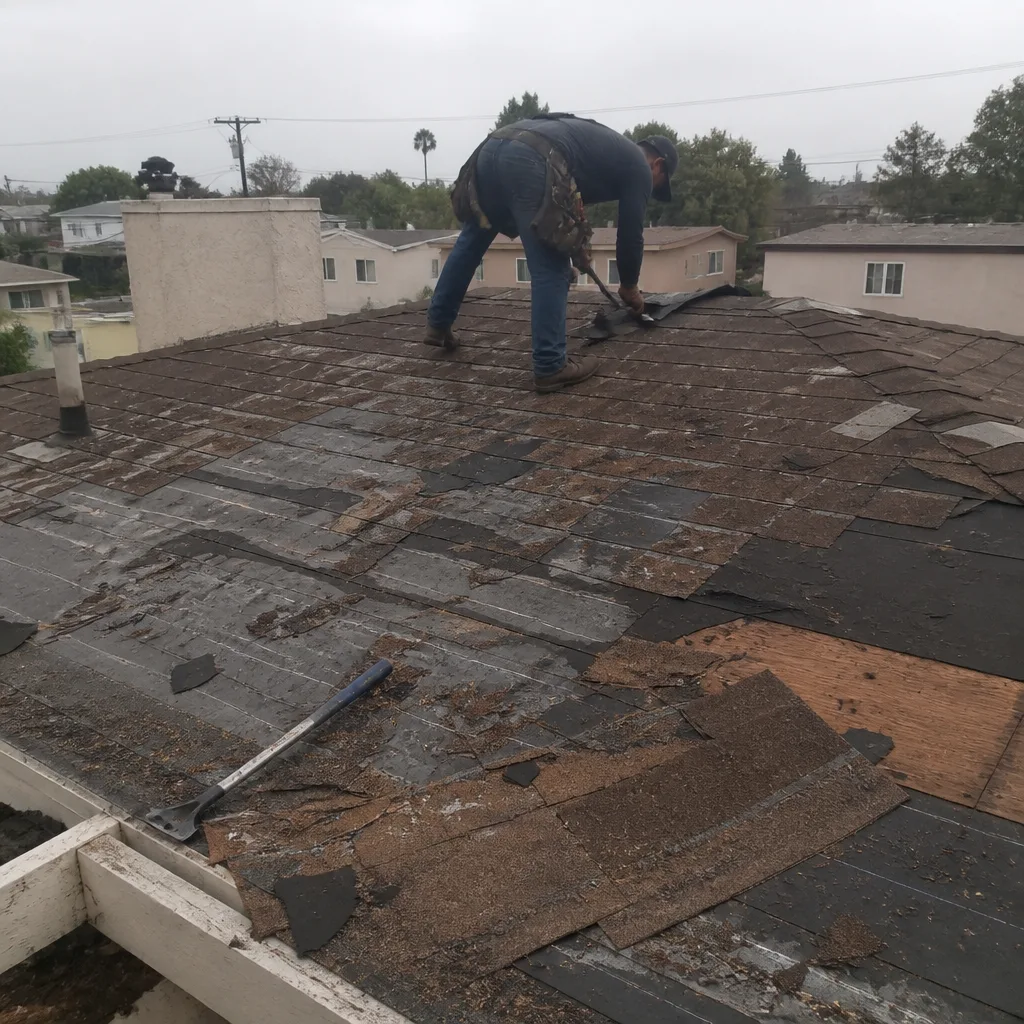 Before
 After
 Before
 After
 Before
 After
Frequently Asked Questions
Most roof repairs in Koreatown fall between $400 and $1,800. A small mod bit patch on a flat roof typically runs $400 to $750. A flashing replacement at a wall or chimney runs $600 to $1,200. Tile roof underlayment repairs are the most expensive common repair at $800 to $1,800 because the existing tile has to be removed and reinstalled. Your exact price depends on the roof type, the damage extent, and how complicated the roof access is on your specific lot. Call (866) 974-2271 for an exact quote – estimates are free.
Most routine roof repairs in Koreatown do not require a City of LA building permit. Patching a low-slope mod bit roof, replacing a section of flashing, resealing a drain, or repairing a tar-and-gravel split fall under routine maintenance. Full roof replacements almost always require an LADBS permit, and large partial re-roofs sometimes do. If your repair grows beyond routine maintenance, ask your roofer about the permit path. A legitimate local contractor will walk you through it clearly.
Small flat roof patches and flashing repairs can often be completed in a single visit, assuming the weather cooperates and the roof surface is dry. Larger repairs that involve cutting out damaged sections, replacing insulation, or working on tile underlayment take longer. Koreatown Roofing schedules flat roof repairs promptly and will give you a clear timeline before starting work.
Most Koreatown apartment buildings, duplexes, and mixed-use properties have low-slope modified bitumen roofs – a multi-layer asphalt membrane applied over a flat or nearly flat deck. Older buildings often have built-up tar-and-gravel roofs. The 1920s and 1930s bungalows on streets like Serrano and Harvard frequently have Spanish tile roofs with degraded underlayment. Each roof type requires a different repair approach, which is why it matters who you hire.
Santa Ana wind events in Koreatown cause more roof failures than rain does, because the winds lift membrane edges, loosen flashings, and open seams that were previously watertight. Once the wind has opened a gap, the next rain gets inside. If you noticed a leak after a windy stretch, the wind likely created the opening. Doing a visual roof check after Santa Ana events helps you catch damage before it becomes a ceiling stain. Call (866) 974-2271 for a professional roof inspection in Koreatown – estimates are free.
LA County homeowners insurance typically covers roof damage caused by sudden events like a windstorm, a falling tree, or hail. It generally does not cover damage from long-term wear, deferred maintenance, or an old roof that has reached the end of its lifespan. The quality of your claim depends heavily on documentation: photographs of the damage before repair, a written repair description from your roofer, and itemized invoices. If you’re filing a claim, document everything before any repair work starts.
The Bottom Line
Koreatown roofs are unlike the roofs in most roofing guides. They’re flat, they’re attached to neighboring structures, they’re accessed through tight lots, and they fail in ways that suburban roofs don’t. The best protection is a roofer who knows these buildings – who can identify a mod bit seam failure, who understands LADBS permit requirements, who anticipates Santa Ana wind damage, and who gives you real material choices rather than whatever brand is convenient. That’s how we work at Koreatown Roofing. We’re Koreatown Roofing home – roofing specialists, not generalists, working with the brands you already trust. If your roof needs a look, start with an inspection: see our Roof Inspection in Koreatown page to schedule one. If you know it needs repair, our Roof Repair in Koreatown service is what this guide is about. And if the damage is past repair, we’ll talk you through Roof Replacement in Koreatown options. One contractor, every stage. Call (866) 974-2271 for a free estimate.
Written by the team at Koreatown Roofing, serving Koreatown since 2014.