

Last updated October 30, 2026
 Metal roofing
 Architectural shingles
 Tile roofing
 GAF
 Owens Corning
 Flat & low-slope
Free roof inspection with deck photos before we talk money - GAF and Owens Corning certified installation
Roofing Warning Signs: A Koreatown Homeowner’s Reference Guide
Most roofing guides open with dramatic photos of water pouring through a living room ceiling. That’s the problem. By the time water is visible inside your home, the failure started weeks earlier, and the repair bill has already tripled. In Koreatown, the most expensive roofing repairs we see don’t start with a dramatic leak. They start with a blister nobody noticed on a flat roof, a drain that was draining just a little too slowly, or an HVAC curb that shifted a quarter inch during a minor tremor. This guide is built around those early, quiet signals: the ones specific to Koreatown’s building stock, climate, and seismic activity. You’ll learn how to read your roof before it reads you a five-figure invoice.
Quick Answer
The most reliable early roof warning signs in Koreatown are bubbling or blistering on flat roof membranes, lifted parapet cap flashing, slow-draining roof drains, granule accumulation in gutters, and separating flashing joints at roof penetrations. Most of these are visible from the roof surface or upper windows but invisible from street level, which is why a professional Roof Inspection in Koreatown catches them before they become active leaks. The single most important skill is learning to document these signs with a camera so you can get accurate estimates without guesswork.
Styles & brands we work with
Table of Contents
- Early Flat-Roof Warnings in Koreatown Multifamily Buildings
- Interior Warning Signs Most Homeowners Misread
- Shingle Warning Signs Beyond Missing Tabs
- Why Minor Tremors Cause Flashing Separation
- How to Photograph Roof Problems for Estimates and Insurance
- What Time of Year Koreatown Roofs Show Their Hand
- Common Mistakes to Avoid
- When to Call a Professional
- Frequently Asked Questions
Early Flat-Roof Warnings in Koreatown Multifamily Buildings
Koreatown has a high concentration of low-rise multifamily buildings with flat or low-slope roofs. These roofs fail differently than pitched shingle roofs, and the earliest warning signs are subtle enough that property managers routinely walk past them on the stairwell to the roof door. Most flat roof failures begin at a membrane seam or a penetration and spread outward under the surface, where nobody can see the damage until it reaches a deck seam or a drywall seam.
You’ll learn the three most common early flat-roof issues below, one at a time.
Membrane blistering patterns. Blisters are raised bubbles in the roof membrane where trapped moisture expands and contracts with daily temperature swings. In Koreatown’s climate, with hot, dry summers and cool, damp winter mornings, these expansion cycles are relentless. A blister the size of a quarter today becomes a cracked, open sore by the time the first winter rain arrives. What matters is the pattern. Isolated blisters near a mechanical unit usually mean a localized installation flaw. Blisters in a line along a seam tell us the seam itself is failing. Blisters scattered across a broad field indicate moisture trapped under the entire membrane, which typically means a full replacement is coming sooner than the building owner hoped.
Parapet cap flashing lift. Koreatown flat roofs terminate at parapet walls, and those walls are capped with metal flashing that covers the top edge. That cap flashing takes a beating from wind, sun, and seismic movement. The early warning sign is a cap that has lifted even a quarter inch from the wall surface. From the roof, you’ll see daylight under the metal or a bead of old sealant that has cracked and separated. From below, you won’t see anything at all. Once the cap lifts, wind-driven rain enters the wall cavity and travels down inside the building, often emerging as a stain on an interior wall two floors below the actual roof level.
Overflow drain backup marks. Koreatown’s older buildings use interior roof drains rather than scuppers. Those drains clog with leaves, plastic bags, and the fine dust that blows across the neighborhood. Every roof has an overflow drain as a backup, and that overflow drain leaves a telltale mark when it has activated: a faint waterline stain on the parapet wall, a patch of discolored membrane just below the overflow opening, or accumulated debris flattened into a fan shape in one area. These marks are evidence that water has pooled to the overflow level, which means the primary drain is restricted. A slow drain is a roof failure in progress, and it’s a repair that costs a fraction of what a collapsed deck repair costs.
Flat roof membranes in Koreatown are also exposed to UV degradation that varies by material. Modified bitumen roofs age differently than single-ply TPO or PVC roofs. A homeowner who knows what material is on the roof can anticipate which warning signs to watch for. If you don’t know, that’s a conversation worth having during an inspection. We quote flat roof work with the material that fits the building’s drainage geometry and the owner’s replacement cycle, whether that’s TPO, PVC, or a multi-layer modified bitumen system from manufacturers like IKO or Boral. There’s no single right answer, but there is a wrong answer: guessing based on someone else’s building.
Interior Warning Signs Most Homeowners Misread
Interior signs are tricky because they rarely say “roof leak” on the first day. They masquerade as other problems, and homeowners often chase the wrong fix for a season or two before realizing the roof is involved. A tenant complaint about “humidity” or “weird paint” might be the earliest signal of a roof issue, and property owners who know how to triage these complaints save real money.
Paint bubbling on upper-floor ceilings. Bubbling paint on a ceiling is not always a plumbing leak. If the bubble is on the top floor and the building has no plumbing in the ceiling cavity above, the moisture source is almost certainly the roof. The bubble forms when water travels along the underside of the roof deck, saturates the drywall, and releases vapor that pushes the paint layer away from the drywall paper. The bubble often appears weeks after the initial water intrusion, and it may dry out and shrink in summer, fooling the homeowner into thinking the problem resolved itself. It didn’t. The moisture is still in the cavity.
HVAC condensation confusion. Koreatown multifamily buildings often run HVAC ducting through attic spaces or ceiling plenums. When the roof leaks, water sometimes enters the duct chase and drips out of a ceiling register, making the leak look like an HVAC condensation problem. A homeowner will call an HVAC technician, get the condensate line cleared, and still see dripping on the next rainy day. The test is simple: does the drip happen during or after rain, or during hot weather when the AC runs hardest? Rain-related drips at a register are roof leaks until proven otherwise.
Attic humidity spikes in older Koreatown buildings. Many older residential buildings in Koreatown have limited attic ventilation. A roof leak adds moisture, but so does a roof that has simply reached the end of its functional life and is no longer sealing at the hundreds of small penetrations and fasteners that every roof has. If you can access the attic, check the underside of the roof deck early in the morning after a cool night. Condensation droplets or dark staining on the deck surface indicate high humidity, which may be a slow leak or a ventilation deficiency. Both are roof problems, and both are cheaper to address before mold establishes itself.
Stains that appear on interior walls rather than ceilings. Water follows the path of least resistance, and in Koreatown’s flat-roof buildings, that path often runs down the inside of a parapet wall. If you see a stain on an upper-floor interior wall, particularly one that shares a wall with the building exterior, trace the wall upward. The stain may be coming from the parapet cap flashing, not from the roof field itself. Interior wall stains are frequently misattributed to window leaks, and the window gets resealed while the roof keeps leaking.
Shingle Warning Signs Beyond Missing Tabs
Missing shingles are the obvious sign. By the time a shingle is gone, the roof has been shedding its protective layer for a while. The earlier warning signs are diagnostic: they tell you not just that the roof is aging, but how it’s aging and how fast. Koreatown’s residential streets include Spanish Colonial Revival homes, Craftsman bungalows, and mid-century apartments, and each roof type expresses aging in its own way.
Granule loss patterns. Asphalt shingles shed granules over their entire life, but the pattern of loss tells a story. Uniform, light granule loss across the whole roof is normal aging. Heavy granule loss in specific zones, such as the south-facing slopes that take the brunt of Koreatown’s afternoon sun, indicates UV degradation. Granule accumulation in gutters and at downspout outlets is the tell: if you can see a thick layer of colored granules in the gutter after a dry summer, the shingles are shedding faster than they should. Hold a handful of gutter granules next to a shingle from the same roof. If the shingle looks “bald” in patches compared to the gutter contents, the roof is entering its final third of life.
Cupping direction as a diagnostic tool. Shingle cupping happens when the shingle’s edges curl upward or downward. The direction tells you the cause. Cupping upward at the edges, like a shallow bowl, is typically a manufacturing or moisture issue: the shingle’s underside is swelling from trapped moisture. Cupping downward at the edges, like a dome, usually means the shingle’s top surface is drying out faster than the underside, which is a UV and heat exposure issue. On a Koreatown roof with a shallow slope, consistent upward cupping across a large area tells us the deck ventilation is insufficient, and the fix is a ventilation correction, not just shingle replacement. You can read the roof like a map once you know what the shapes mean.
Nail pops as early structural signals. Nail pops occur when a roofing nail backs out of the deck, lifting the shingle slightly and creating a small bump. One nail pop is a minor repair. Nail pops across a wide area indicate deck movement, thermal cycling, or installation with the wrong fastener length. In Koreatown, where minor seismic activity adds low-level movement to the daily thermal cycle, nail pops can cluster in patterns that correspond to the building’s framing. If you see a line of nail pops running along a rafter line, the deck is moving differentially. That’s a structural conversation, not a shingle conversation.
Shingle roofs in Koreatown also age unevenly based on nearby tree cover and neighboring building shadows. A roof that’s 30 years old but lives under a canopy of mature jacarandas may have years left, while a fully exposed roof of the same age on a south-facing slope may be done. The shingle warning signs are most useful when read in context. If you’re uncertain what you’re looking at, a professional can tell you in one visit whether you’re looking at a maintenance item or a Roof Replacement in Koreatown timeline.
Why Minor Tremors Cause Flashing Separation
Most homeowners think about roof storm damage in terms of wind and rain. In Koreatown, the more common source of slow, invisible roof damage is the frequent low-level seismic activity that most residents barely register. These aren’t the dramatic quakes that make national news. These are the small tremors that rattle a window for two seconds and are forgotten by lunchtime. But roofs remember.
Every roof has flashings: metal transitions at chimneys, vent pipes, skylights, HVAC curbs, and parapet walls. Flashing works by bridging the gap between the roof membrane or shingles and the vertical surface. The sealant and fasteners that hold flashing in place are designed to flex, but repeated micro-movements gradually loosen the mechanical connections. A quarter inch of movement is invisible from the ground, but it’s enough to let water in during the next rain.
The most common seismic-related flashing failure we see in Koreatown is at HVAC curbs on flat roofs. Rooftop HVAC units are heavy, and they sit on curbs that rise through the roof membrane. During a tremor, the unit’s mass resists movement while the building moves, and that differential stress concentrates at the curb flashing. Over time, the sealant bead cracks, the metal separates from the curb, and water enters around the unit. The leak usually shows up as a stain on the ceiling directly below the unit, which homeowners sometimes mistake for AC condensation.
Skylight and chimney flashing on pitched roofs fails the same way. The flashing doesn’t tear suddenly. It separates incrementally, with each tremor widening the gap. The gap is often hidden under a shingle tab or behind a counterflashing, so it’s invisible from below. The first visible sign is a water stain that appears months later, or a patch of shingles near the flashing that looks slightly “off” compared to the surrounding roof.
If you’ve felt even one noticeable tremor in the past year, and your roof is more than ten years old, the flashing at your roof penetrations has likely moved. The fix is not a full roof replacement. It’s a targeted flashing repair: remove the old sealant, re-secure the flashing, and apply a fresh sealant that can flex with the next tremor. This is exactly the kind of work we do as Roof Repair in Koreatown specialists, and it’s a repair that costs a small fraction of what waiting for a full leak costs.
How to Photograph Roof Problems for Estimates and Insurance
Most homeowners take one photo of a water stain and send it to a contractor. That photo tells us almost nothing. It shows the symptom, not the source. A useful photo set tells the whole story: the roof surface, the flashing details, the surrounding area, and the interior manifestation. This matters for two reasons. First, a good photo set lets a contractor give you a more accurate preliminary estimate before the site visit. Second, if you file an insurance claim, adjusters respond to documentation, not to a single blurry shot of a ceiling stain.
Here’s a step-by-step process for documenting roof warning signs in a way that’s genuinely useful.
- Photograph the roof surface itself. If you can safely access the roof or an upper window with a view, take photos of the roof field in organized rows, overlapping each shot by about 30 percent. Don’t try to capture the entire roof in one photo; a wide shot shows nothing useful. Get close enough to see membrane seams or shingle courses.
- Photograph every roof penetration. Vent pipes, skylights, chimneys, HVAC curbs. Get a photo of the flashing from the side, not from directly above. The side angle shows separation gaps that a top-down shot hides.
- Photograph the roof drains or gutters. A clogged drain or a granule-filled gutter is evidence. Get a shot showing the drain opening and the surrounding debris pattern.
- Photograph the interior symptom with context. A water stain photo should include the ceiling/wall junction, the location of any nearby registers or fixtures, and a wide shot showing where the stain is in the room relative to the exterior walls. The context shot is the one that tells the contractor whether the source is above the stain or traveling from somewhere else.
- Photograph the underside of the roof deck if accessible. Any dark staining, condensation, or visible fastener rust is evidence. Use a flashlight and take photos at an angle to show surface condition rather than a flat, dark image.
- Date and label everything. Most phone cameras timestamp photos automatically, but a quick note like “master bedroom ceiling, east wall, after 1/14 rain” takes five seconds and makes the photo set dramatically more useful to an adjuster.
Good documentation is a form of roof maintenance in itself. It creates a baseline, shows progression over time, and makes every conversation with a contractor more efficient. If you’re preparing for an insurance claim or simply want a professional assessment of what you’ve photographed, a Roof Inspection in Koreatown turns your amateur photos into a formal condition report.
What Time of Year Koreatown Roofs Show Their Hand
Roofs are not static. They expand and contract with temperature, they dry out in summer, they absorb moisture in winter, and they reveal their problems on a predictable calendar. Knowing when to look for specific warning signs in Koreatown makes your inspection efforts dramatically more productive.
Late summer is when UV damage becomes visible. After months of intense sun, the roof is at its most heat-stressed. Blisters on flat roof membranes are at their largest in late summer, and the first granule loss of the season is visible in gutters by August. This is the best time to assess UV-related aging: the roof has been through a full season of expansion and the damage is “open” and visible.
Early winter is when flashing separations become active. When Koreatown gets its first meaningful rains, usually in November or December, every small gap in the flashing is tested. The first rain of the season is when small leaks appear, because the sealant has been drying and cracking all summer and hasn’t yet been hydrated. If you’re going to check for water intrusion, check during or immediately after the first storm, not after a dry spell.
Spring is when drainage problems surface. After a winter of rain, the drains have been working hard, and accumulated debris has had time to build up. March and April are when we see the most overflow drain activations in Koreatown, because winter debris is still in place and spring pollen adds another layer. A March drain check is a smart annual habit.
After any noticeable seismic event. Koreatown’s minor tremors don’t follow a season, but the pattern is clear: after any event strong enough to feel indoors, roof flashing has moved. A quick visual check of the roof perimeter and penetrations in the days following a tremor costs nothing and catches issues early. If you’re not comfortable on the roof, that’s a perfectly good reason to schedule a professional inspection.
The seasonal pattern means a homeowner who inspects four times a year, at the right times, catches most roof problems before they become active leaks. A homeowner who waits for a leak has already missed the window for the cheap fix.
Common Mistakes to Avoid
- Ignoring isolated blisters on a flat roof. A blister is not a cosmetic issue. It’s trapped moisture under pressure, and it will crack. One blister repaired today is a membrane patch; ten blisters repaired in two years is a new roof.
- Misdiagnosing upper-floor stains as plumbing issues. Before calling a plumber for a ceiling stain on the top floor, check the roof above. Plumbing leaks usually follow a pipe route; roof leaks follow gravity and framing.
- Painting over a ceiling stain without identifying the source. Paint hides the symptom. The water is still in the cavity, and now you’ve added a fresh layer between the water and your eyes. Find the source first, paint second.
- Assuming minor tremors don’t affect the roof. Every felt tremor in Koreatown moves your roof flashing a little. One tremor is negligible. A decade of tremors is measurable separation, and it shows up as a leak during the first winter rain.
- Using caulk as a permanent flashing repair. Caulk is a temporary seal, not a structural fix. If the flashing has separated due to movement, caulk will fail again, often within one season. Proper flashing repair involves mechanical re-securing, not just sealant.
- Taking one wide-angle photo and calling it documentation. A single photo of the roof or a single photo of a stain tells the contractor nothing. Build the photo set described above, and you’ll get better estimates and better insurance outcomes.
When to Call a Professional
Some warning signs are simple enough to monitor. Others require a trained eye and the right equipment. Call a professional when you see active water intrusion, multiple blisters or nail pops appearing in a pattern, flashing that has visibly separated at a penetration, or any sign that water has reached structural framing. If you’ve documented warning signs with photos and you’re not sure whether they’re urgent, a professional assessment costs far less than a delayed repair. A single visit can rule out problems or catch them early, and the report gives you a baseline for future comparison. Koreatown Roofing offers free estimates in Koreatown, call (866) 974-2271 to have a roofing specialist look at what you’ve found.
Frequently Asked Questions
A professional roof inspection in Koreatown typically costs between $150 and $400 for a standard residential property, with many roofing contractors offering inspection fees credited toward repair or replacement work if you proceed with them. The cost varies based on roof type, building height, and access difficulty. Call (866) 974-2271 to ask about inspection pricing and whether the fee applies to future work.
Many small roof leaks can be temporarily sealed the same day they’re discovered, depending on weather conditions and the nature of the leak. A permanent fix usually requires identifying the full extent of water intrusion, which takes a little longer. If you have an active leak, call (866) 974-2271 and describe what you’re seeing, and we’ll tell you honestly what’s realistic given the weather and the roof type.
A properly installed flat roof in Koreatown typically lasts between 15 and 25 years, depending on the membrane type and how well the drainage system has been maintained. UV exposure and seismic activity shorten the lifespan, while regular drain cleaning and prompt flashing repair extend it. A flat roof from a manufacturer like Atlas or Boral, installed correctly, can reach the upper end of that range with consistent maintenance.
Standard homeowner’s insurance policies in California typically do not cover earthquake-related damage unless you have a separate earthquake policy or endorsement. However, if a tremors loosens flashing and a subsequent rainstorm causes water damage, the water damage portion may be covered under the standard policy. Check your policy’s specific language, or document the damage thoroughly and speak with your adjuster. If you need professional documentation of the damage, an inspection report helps.
No. Flashing failure is a localized repair in most cases. The flashing at a vent pipe, skylight, or chimney can be removed, re-secured, and re-sealed without touching the rest of the roof. That said, if flashing has failed in multiple locations across an older roof, it may be a sign that the entire system is nearing the end of its life. A professional assessment will tell you whether you’re looking at a repair or a Roof Replacement in Koreatown.
There’s no single best material for everyone in Koreatown, because different building types demand different things. Flat-roof multifamily buildings often benefit from single-ply TPO or PVC membranes, while pitched residential roofs may be better served by architectural asphalt shingles from manufacturers like IKO or Boral. The right choice depends on your roof geometry, drainage pattern, exposure, and replacement timeline. A roofing specialist who works with multiple manufacturers and who can talk through the tradeoffs will give you a recommendation based on your building, not on what’s in stock.
The Bottom Line
Roof failures in Koreatown are predictable, but only if someone is reading the early signals. Blisters, granule patterns, flashing separation, and drain backup marks are the roof’s early warning system, and they speak weeks or months before water ever reaches a ceiling. The homeowners who save the most money are the ones who learn to look for these signals at the right times, document what they find, and call a professional when the signal is unclear. Your roof is the single most expensive component you’ll maintain on your building. Learning to listen to it is the cheapest insurance you’ll ever buy. Koreatown Roofing works with brands like Tamko and Boral, and if you’re seeing any of the signs in this guide, call (866) 974-2271 for a free estimate from a roofing specialist who knows this neighborhood’s buildings.
Written by the team at Koreatown Roofing home, serving Koreatown since 2014.
See the difference
 Before
 After
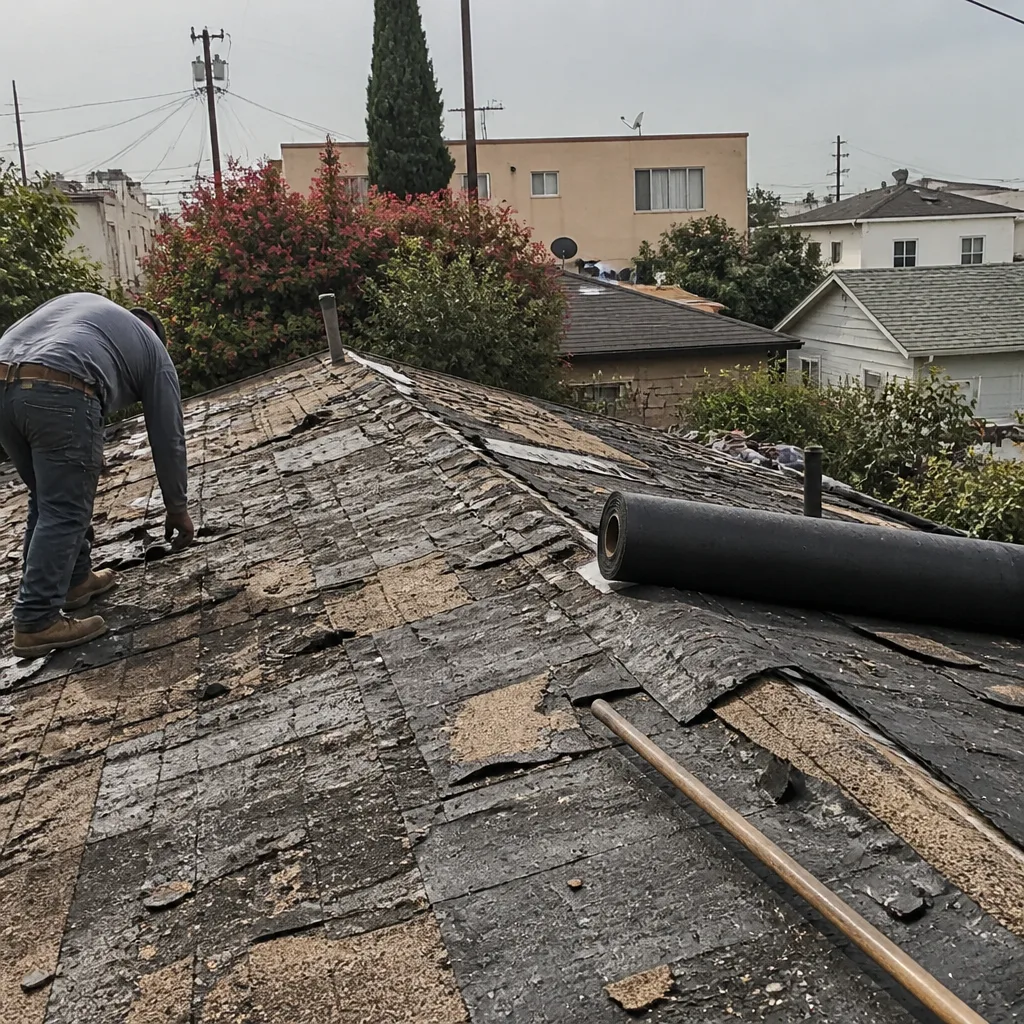 Before
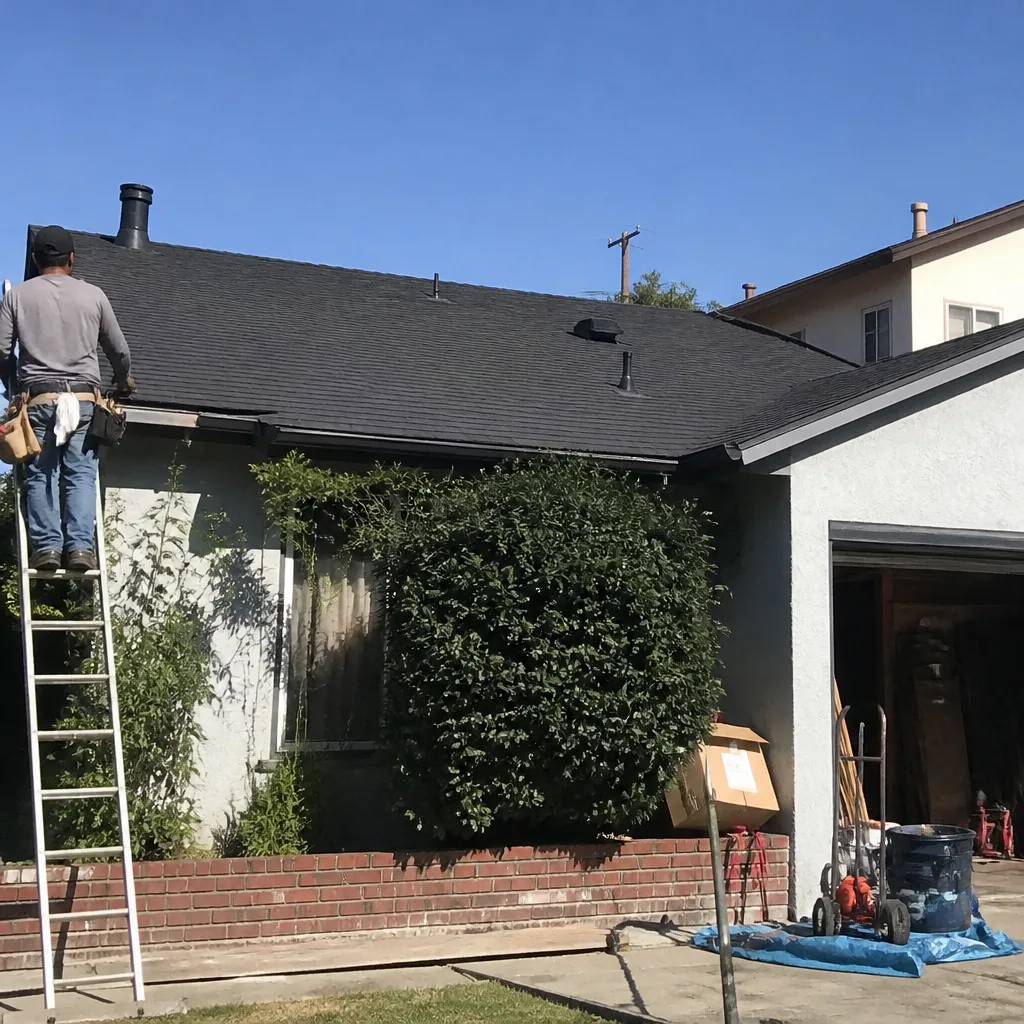 After
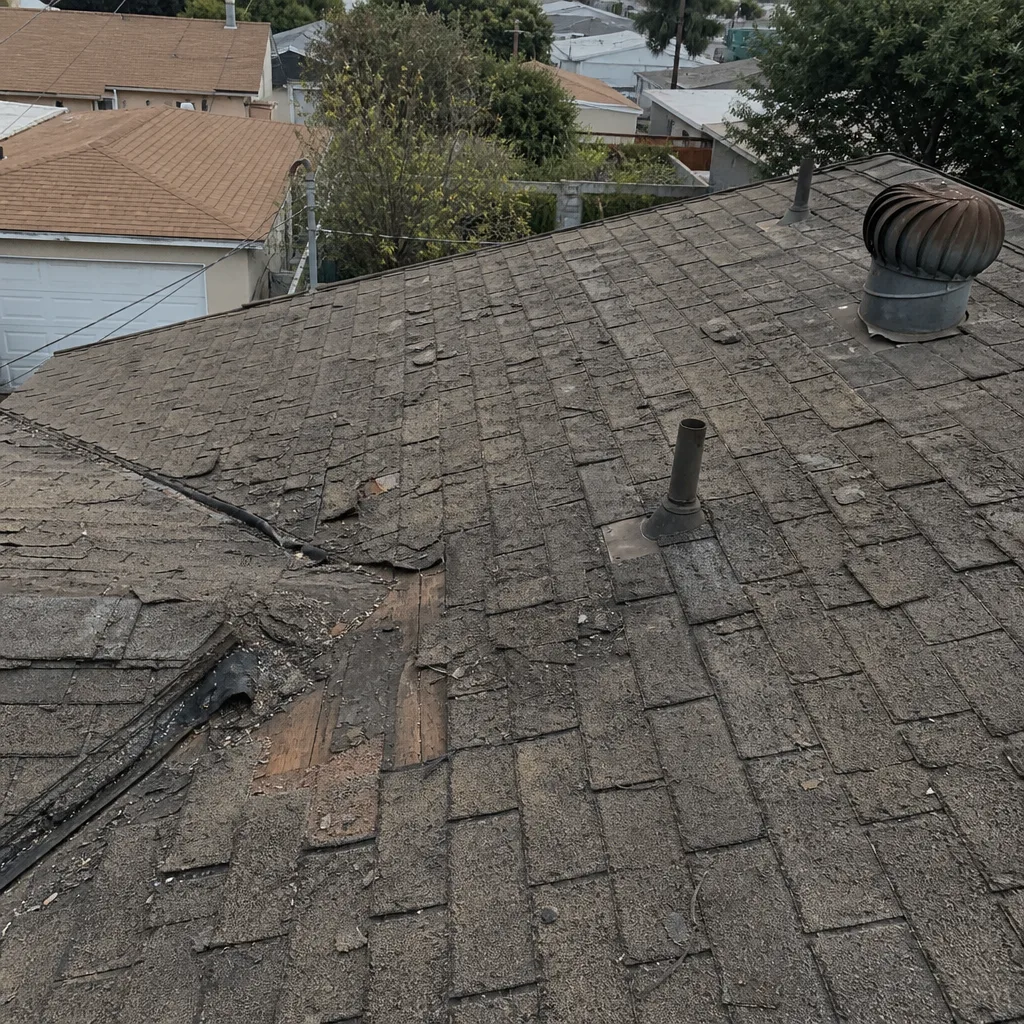 Before
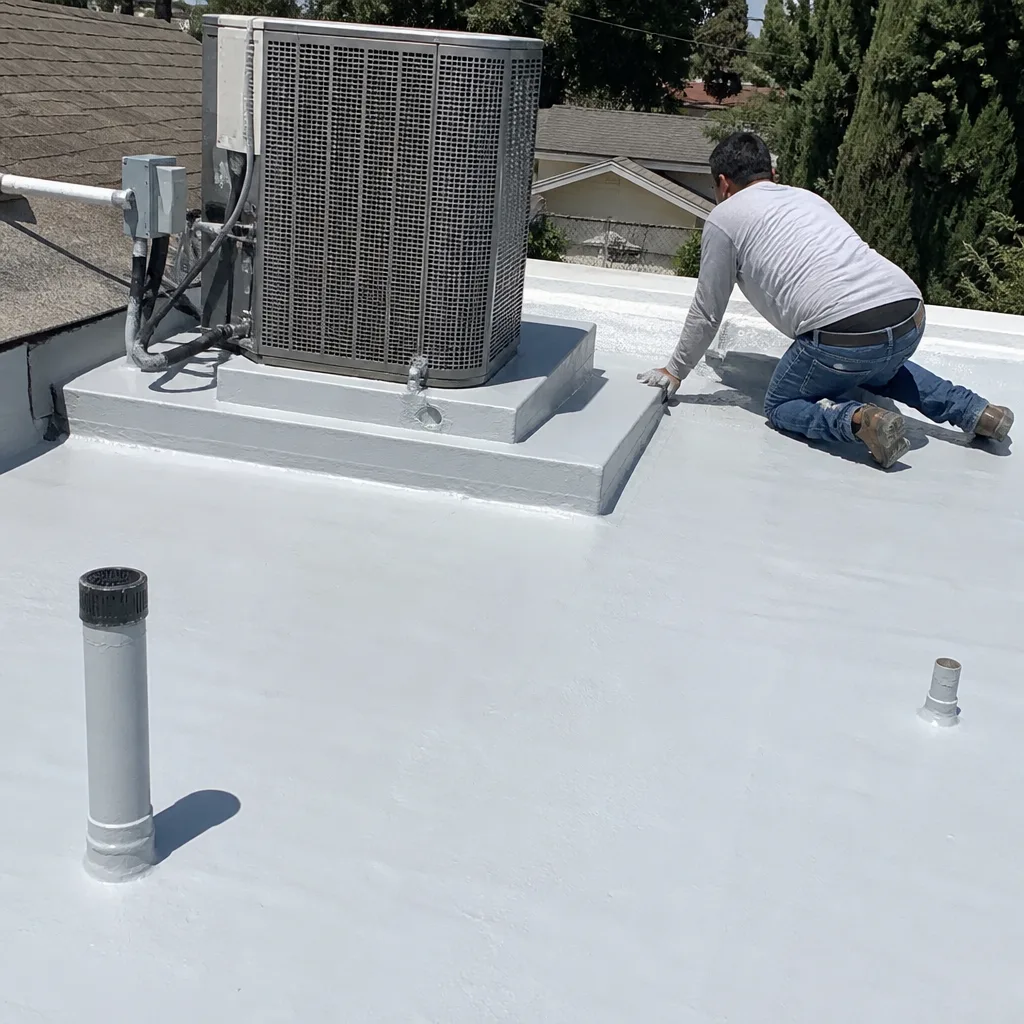 After